Showing posts with label agriculture. Show all posts

September 26, 2010

slow clothes


My clothes are disintegrating. Most are over ten years old. Moths have taken advantage of some of them as the clothes have hung on the line to dry. I’ve come to dislike shopping for clothes, even if I appreciate beautiful patterns, textures, cuts. I no longer get a consumer high if I buy a shirt from H+M. The last three years, I’ve bought almost no clothing (save bras and bathing suits) from big or corporate stores. But I’m finding it hard to find hand made, well crafted clothing that I like, even in DIY San Francisco. And I just would rather spend my money on a good cheese. But it is time to start replacing my beyond mending clothing. So my plan is to slowly build a long lasting wardrobe, one well crafted, ideally sustainably sourced/made garment at a time—one item a month.

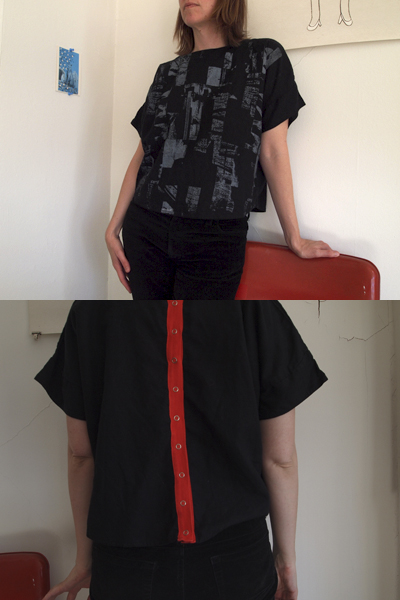
Above is the first shirt I purchased under my slow clothing plan. The shoulder line isn’t flattering on me, but I really like the print, the red stripe down the back, the feel of the fabric and the company. Seems like the designer is thinking deeply about what she’s making and how it’s being produced—she’s a craftsperson.

Recently I read The Hidden Wound (1968–69 and afterword in 1988) by Wendell Berry, in which Berry writes a bit about craftspeople, though the book is primarily about race and community in the US. (Berry writes about his own experiences as a white boy growing up around black workers/friends on his family’s farm and about how those early experiences continue to inform his thinking about race relations and much more. The book sparks a lot of thought.) Here is the passage about craft:

The industrial laborer subserves an economic idea instituted in machines and in mechanized procedures. This is as far as possible from the work of the traditional craftsman or artist, whose making has never resembled what we now call “manufacture,” but is a cooperation and conversation of mind and body and idea and material. The true craftsman does not waste materials because his or her art involves respect for materials. And the craftsman’s products are not wasted because by their quality and durability they earn respect.
...
The great enemy of freedom is the alignment of political power with wealth. This alignment destroys the commonwealth—that is, the natural wealth of localities and the local economies of household, neighborhood, and community—and so destroys democracy, of which the commonwealth is the foundation and the practical means. This happens—it is happening—because the alignment of wealth and power permits economic value to overturn value of any other kind.

He goes on to mention what government could do to promote the improvement of communities and protection of the natural world. And since the government will not do what it takes—will not dissociate from corporate power—it will eventually come down to us to restore community life.

From reading the above bits, I think about how sitting in front of a computer all day at work (which, in the interest of full disclosure, for me is a place with altruistic intentions whose work is funded in large part by corporations) I miss that cooperation and conversation of mind and body and idea and material. My body tells me this regularly. It wants to move around more. My hands want to build and shape and fit, not just click. I think about how the powerful food industries block regulation and information that would (among other things) improve food safety, and about how most consumers only count the monetary cost of food (instead of also considering the toll of industrial ag on people and land ). I think about how as the climate crisis snowballs (bringing storms and food and water scarcity), we will be forced to rely on our communities, our local farmers. our craftspeople and friends. I think about how the erosion of our communities and the misuse of nature (through natural resources depletion, industrialism, pollution, “free” trade) is largely what brought on climate change in the first place.

So yeah, slow clothes in addition to slow food.

July 29, 2010

News!


Hi there,

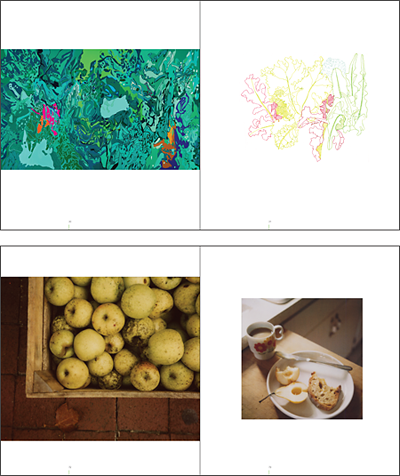
Usually my Sew Green posts are reviews of books—and generally those books are about sustainable agriculture. But today I'm posting about an anthology related to sustainable agriculture that I compiled and designed!

Unlike the authors of the books I've reviewed, I'm not a scientific expert, journalist, or an acclaimed writer. So instead I designed a book that is a cross between a coffee table book (filled with delicious images) and a collection of poetry and creative non-fiction.

From Orchards, Fields, and Gardens features writing from 11 authors, and photos and illustrations from 21 artists. The authors remember activities, people, and places that shape(d) their appreciation for small scale food production and processing. (Sew Green's own bugheart has both writing and photos in the book.)

From Orchards, Fields, and Gardens: Art and rememberings celebrating sustainable agriculture and good food will be back from the printer mid-August! Until then, you can pre-order the book and get $4 off of the regular price.

I hope you like it!


March 4, 2010

Meatless Monday

While I have flirted with vegetarianism all my life I admit I enjoy eating meat. In university, I worked my way through Linda McCartney's Home Cooking, but by graduate school, and after being diagnosed with anemia, I started to eat meat again. I hoped with a more thoughtful approach.

Where does this come from? Did it live a "good life" before coming to my plate. I am trying to instill these same ideas in my girls. I am also working to reduce the meat we do eat. We try to mix it up. Fish, poultry and red meat are not strangers at our table. I am fully aware of the horrors of factory farming. I want to eat more meatless meals and slide a little away from our routine. My goal this year has been two meatless meals added to our weekly repertoire.

My catalyst is three-fold, really: compassion for living things; impact on our health; and the impact meat consumption has on the environment.

In my quest for ideas, I learned of Meatless Monday:
Meatless Monday, along with Wheatless Wednesday, were initiated as a World War I effort by the U.S. Food Administration to encourage Americans to "do their part" in aiding the war effort by reducing the consumption of key food staples. In 2003 the effort was recreated by the Johns Hopkins Bloomberg School of Public Health’s Center for a Livable Future to help Americans adapt to a healthier lifestyle. With an endorsement in 2009 by Sir Paul McCartney - and in turn Gwenyth Paltrow at GOOP - a movement is being built. (Check out the Meatless Monday website for lots of great ideas.) We have added to that "Soup Saturday" (a vegetarian soup) - which I can see morphing into "Salad Saturday" come summer (hopefully inspired by our own garden).

My family - mostly my husband and youngest daughter have made a few groans - but no real complaints. My challenge is two in the house with soy allergies - that makes it tough - and keeping it varied. Lots of lentils in the cupboard!

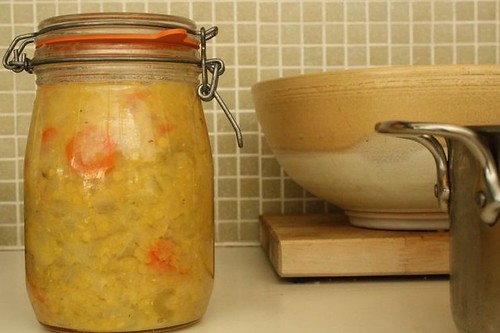
red lentil soup

So, what vegetarian fare scores high on your table?

February 28, 2010

end junk mail + usda letter by this wednesday


two actions for you

1. if you want to stop getting credit card offers (for 5 years or forever!), check this out from the FTC. there's also a lot of info about stopping other kinds of junk mail here, but i don't know who sponsors this info. seems good though.

2. the usda is accepting public comment about GM alfalfa until this wednesday. here is the USDA email page. here is some wording from credo:

I am writing in regard to Docket APHIS-2007-0044, and I demand that the USDA reject Monsanto's application to market genetically engineered alfalfa. The USDA may not believe it matters if GE alfalfa contaminates organic and other non-GE crops, but I certainly do.

Consumers must be able to avoid genetically engineered products. Farmers must be free of the threat of contamination and the USDA must not put organic farmers' livelihoods at risk. The USDA admits that approval of GE alfalfa will make transgenic contamination inevitable. This is unacceptable.

Therefore, I urge you to reject Monsanto's application to sell genetically engineered alfalfa.

here is more info from credo on the matter. (you can also send your email through the credo site, but then you get added to email lists.)

November 12, 2009

commitment issues


I’ve been reading a lot of Wendell Berry's books lately, and one of the main themes throughout his essays and fiction (haven’t gotten to the poetry yet, but i’m sure it’s there as well), is that of committing to a place—working to protect and improve that place, the land and one’s community. While I am all for that in theory, I have had a very hard time putting that idea to practice in my own life.

I’ve lived in San Francisco for over ten years now, and at various points I’ve tried to commit myself to this city, but have never really succeeded. Part of this for me has to do with having grown up in two places, Sweden and California, and usually missing where I am not. Another part is my wondering if I’m really a city person. I long for more green and quiet. I also wonder if there is a place where it’s easier to build community. Often SF feels like it’s a city for (mostly hipster) 20–30 year olds and/or the wealthy.


I could go on and on about what makes me think about moving away. But one of the things that is really exciting about and makes me want to be in the Bay Area right now is the food movement. There is so much interest in making connections with surrounding area farmers. (We here are lucky to live in an area that has a lot of biodiverse, eco-conscious, farms.) Restaurants that use all locally produced or gathered food are cropping up left and right. People are raising chickens and bees in their backyards. They’re gleaning fruit and meeting their neighbors in the process. They’re building gardens and joining CSAs. Check out how this wonderful woman collects farmers’ market leftovers and distributes it to local food pantries.

I am trying to figure out what I can do to enter this movement more, to commit more to this place I call home. I do subscribe to a CSA and go to the Alemany Farmers’ market every Saturday with two lovely friends. And I sometimes write about agriculture related books here and there. But I want to do something more. Maybe join Slow Food San Francisco, attend some of the Kitchen Table Talks, go to Garden for the Environment events or volunteer at a local farm. I wouldn’t mind hanging out with some sheep. (Would love that in fact.) It would be fun to start a little group of people who go and visit different Bay Area farms on the weekends.


Worldwide Opportunities on Organic Farms (WWOOF) is something I’m considering, though the farm I’ve been thinking about contacting is in Sweden, so there goes the rooting myself here idea.

Starting a backyard garden (for real!) in 2010 will be a growing (oh geez) and rooting (oh geez again) experience.

Or there’s this group, amyitis, that sets up a garden with you.

What are you all doing to involve yourselves in your place more actively?

Some links about new farmers/farming methods
Redefining farming (with video)

A new family farmer (video)

The Greenhorns (trailer)

Wes Jackson is the co-founder of The Land Institute and writes about farming using nature as a model.


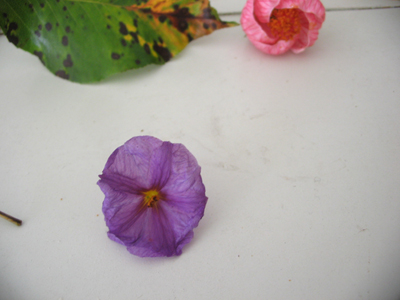
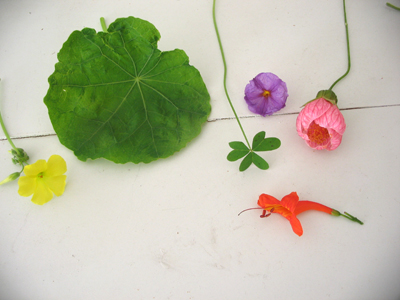
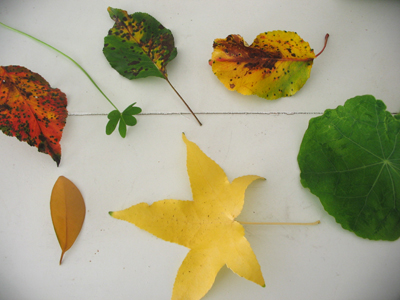
{Flowers and leaves all found (mostly on the ground) around this glorious place.}

October 8, 2009

keeping the harvest

sweetpotatoes

Fall harvest time is just about here! The nip in the morning air, and the new crop of greens, lettuces, sweet potatoes and cruciferous vegetables at the farmer's market and in our garden get me thinking about all the good things I want to cook this fall. I'm also getting a bit wistful already thinking about how much I will miss the fresh veggies this winter, and scheming about how to put some veggies up for those thin months.

Last week we got an inspiring email from the wonderful farmer who runs our CSA, Wild Onion Farms, about easy ways to save some of the harvest for winter. Here's what she said:

"Here's a few tips on how to easily put away some real fall food for later, without any special equipment or a lot of long sweaty hours in the kitchen:
  • I've cured the sweet potatoes and butternut squash for storage already. If you want to stock up on these, the squash will last another 1-2 months, the potatoes will last 'til spring. Store them in a cool, dry, dark place (50-60 degrees is ideal). A chilly basement or garage is good. If you want to extend the butternut squash, go ahead and bake up a huge batch, put it in freezer bags, and stash it away in your freezer.
  • Basil can easily be frozen: chop it up in a food processor and throw in little bags in the freezer, or go ahead and make a big batch of pesto and freeze that in individual portions (omit the cheese, it doesn't freeze well).
  • Peppers, hot or sweet, can be chopped up, tossed in freezer bags, and chucked in the freezer. Nothing more. They won't retain their texture, but it won't matter if you're adding them to winter soups, stews, or sauces.
  • Okra can be stashed away by cutting it up into slices, dip it into boiling water for a minute, drain, pat dry, and pack into freezer bags or containers.
  • Cooking greens of any sort are really easy to freeze as well. Wash, chop, blanch in boiling water for a minute. Drain them, squeeze any excess water out, and pack away into the freezer.
  • You can also cook up large batches of any of your favorite dishes, from garlicky greens to grilled eggplant, and tuck extra portions away in the deep freeze to enjoy months from now.
  • Most root vegetables (beets, carrots, radishes, turnips), once you've removed the tops and placed them in plastic bags in the fridge, will last for months."
- Elizabeth Haarer, Wild Onion Farm (shared with permission)

I've been working on some of these easy harvest-extenders, and thought I'd share some of my favorite recipes, too.

Last week I made up a batch of Vietnamese-style hot chili sauce with the hot peppers in our garden, using this recipe. I had plenty to make a jar for us and share a big jar with my sister. This would make a great gift for someone who likes to cook and loves hot food.

Here's a link to my method for making big batches of savory vegetable stock - it's a great way to use up your veggie odds and ends, and makes a delicious, hearty, nutritious broth for winter recipes.

Elizabeth mentioned garlicky greens in her email, and it got me thinking about this wonderful recipe from my dear friend Anne, who loves to have cooking (and eating) parties with friends. If you're not from the Southern U.S., you might not know how wonderful collards can be -- and even if you are from the south, you might have only had them cooked to death with a hamhock. This is a great way to find a new (and vegetarian) appreciation for a humble green leaf:

Sauteed Collards (or any other hearty green you like)

Ingredients: 1 bunch of collards for 2-3 people
4-6 garlic cloves
1/4 cup olive oil

Rinse collards and remove the ribs from the middle of the leaves. Then stack the leaves in a pile and roll them up like a cigar. Then thinly slice them.

Peel the garlic and slice each clove in half long-ways unless really large, then slice into thirds.

Heat the oil over medium heat. When hot, add the garlic and cook until just getting golden, and remove. Do not let them get brown or they will make the oil a bad (burnt) flavor. Now turn up the heat to medium high and add the collards with whatever liquid clings to the leaves. Stir them with a wooden spoon or tongs, being sure to bring up the ones from the bottom so everything gets cooked. I like them crunchy, but you can cook them to your liking. Just before serving, add the garlic back in and stir them up.

I like to serve these with plenty of freshly ground black pepper, and some apple cider vinegar on the side for purists. Have fun cooking up your harvest this fall!

September 23, 2009

(sub)urban chicken keeping. part II

(part I found here.)

modern chooks

So the chickens have been with us for over a year now. We love them. A friend recently compared them to having three poodles - and they weren't really far off. They follow me around the yard, stand by the backdoor begging for a treat, or to be let in, (they aren't - at least not often) and one of them in particular loves to be held. Our pullets have grown into hens, and two are currently experiencing their first molt. (Which involves the loss of feathers and decrease in egg production while all their energy goes into a glossy new coat.) It is wonderful!

So what do you need to know? This is by no means comprehensive, and I strongly encourage further reading of any / all of the resources listed at the end.

Is permission from your city required to have them?
More and more cities are allowing homeowners to keep backyard chickens. In Los Angeles, we are lucky to live in an area zoned for agriculture (not all neighborhoods are) and we are allowed to have a flock, with the only caveat being a "distance requirement". Hens are to live 20 feet from our residence and 35 feet from our neighbors residence (not the property line) and if we had a rooster, that would change to 100 feet from our closest neighbor. (To learn more about local codes, there is a good starting point over at The City Chicken - but do make sure to find out what your city, or neighbourhood, allows before buying your chicks.) **Yesterday Los Angeles passed a new law limiting the number of roosters kept in the City to one, without a permit.**

Don't you need a rooster to get eggs?
No! You only need a rooster if you want chicks.

How long do hens live? and how long do they lay?
My reading tells me that they can lay consistently for up to five years. They live (and will lay sporadically) for eight or more.

What are the costs?
Our chicks were under $3 each to purchase. The coop was more of an investment - but we are lucky that D is a carpenter and could build it in-house. Their feed is an on-going expense (and like everything, more expensive if you go organic). You should also consider veterinary pills, should a chickens become ill, or injured.
132:342

How much space do chickens need?
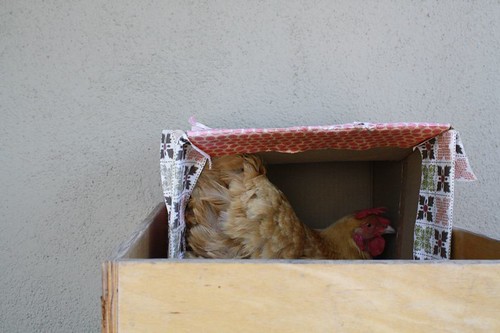
In my research, a rule of thumb seemed to be that each chicken should have at least 10 square feet of yard to run around in, and 4 square feet of hen house. They also need a nesting box (our three share a 4 ft sq box within the hen house), seem to like a place to perch (not too high, and wide enough to comfortably support their feet), and a spot for a dustbath. (I'll add that I don't think the nesting box is necessary - but makes it easy for us to know where to look for eggs. They like a private spot, and have also been known to lay in cardboard boxes left in the yard, as well as on one particularly hot and uncomfortable day, right at my feet.)

How do you keep them safe?
In designing and constructing our coop, raccoons and possums (to which we have lost all our koi) were forefront in our thoughts. D made sure that the run of the coop was made from heavy cage wire (not "chicken wire" which isn't very strong) and that the hen house had secure doors and window. Raccoons are very good with their hands, so we have locks (simple carabiners) on all entries that go on every night. We are fortunate that I work from home, so the hens are usually found wandering the backyard through the day. I am always listening, and they have alerted me to intruders such as neighbourhood cats and ducks (who like our pool)with lots of clucking and wing flapping.
It is also important to protect them from plants that may be poisonous to them, as they like to nibble on most things green. Oh, and chickens can't swim. So if you have a pool or pond, keep this in mind.

Will D share his coop plans?
I'll ask him... He developed his plan from a lot of research on-line, and in the books listed below.

How do you protect them from the heat?
We live in a very hot area of Los Angeles (high of 103 today!) so this has been a major concern. (We have a close friend who tragically lost a hen to heat stroke this summer.) We can easily see the girls discomfort as the temperature rises and they begin to lift their wings and pant to stay cool. We hose down their area (and the one of them that likes to be sprayed) regularly on hot days - as well as keeping a supply of ice packs at the ready to cool the nesting box and under some of our trees where they will lie, and get some relief. It is also very important to have cool water available for them to drink. I have found that while cute, our hens aren't the brightest bulbs in the box and will often not go to drink when they are thirsty, but when I bring them water they are quick to take a sip.

What do they eat?
Our girls eat "laying pellets". It is recommended that a fully grown, laying chicken needs 5 oz of food / day. They forage instinctively (good-bye backyard bugs!) and also love treats from the kitchen (pasta, rice, fuits and veggies are good, but avoid anything salty, sugary, fatty, citrus or meat.) One of ours has even eaten a mouse. Because chickens don't have teeth, they rely on grit to digest their food. If they can't find small stones in their surroundings, grit must be supplied.

Do they eat everything in your garden?
Yes. And no. We are in an ongoing experiment to see what is "chicken friendly" in our yard. (ie. It is safe for the chickens to eat, but they aren't interested in eating it.) It has been hit and miss. They do seem do love crabgrass (good!), but also loooove my succulents (bad!). We had to put a fence around our vegetable garden to ensure the produce ended up on our table. (Though they don't seem to like tomatoes.)

Are they clean?
Like any pet, that depends a lot on your input. The birds themselves are very clean. They love to have a dustbath, and will take up in one of the flowerpots if not provided a spot. (Ok, to be honest, they may take up in a flowerpot anyway. I have lost a lot of plants to this.) They spend a lot of time grooming themselves, and unless you are showing them, do not need to be bathed. They void half of their poop in the night, so their coop does need to be cleaned regularly. (Aside from the daily cleaning we wash it out thorough with a teatree oil soap monthly, and we have dusted with foodgrade diatomaceous earth every six months as part of our pest-control management.) We also keep our food supply locked in a metal garbage bin at night to dissuade any rodents looking for an easy meal. The design of our coop allows us to move it around the yard, so one area does not become inundated with all things chicken. Their food and water receptacles also need to be cleaned regularly.

heads or tails

Ok, but what about the poop?
Yes, chickens poop. And sometimes it seems like a lot. We clean our coop and run every day, and the smell isn't evident. We line our hen house with shredded newspaper (only the non-glossy pages, printed with soy ink) and toss it, poop and all, into our composter. Chicken poop is rich in nitrogen, and makes for lovely compost. We haven't found a marked increase in flies - though I have heard others complain of this.
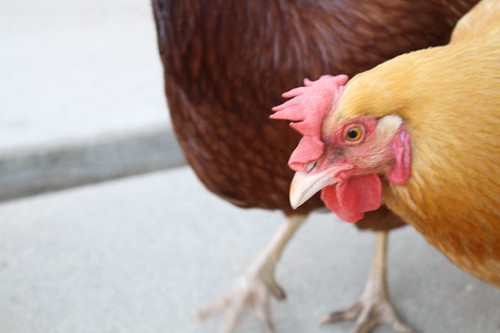
chick-a-dee

If you had to do it all over again would you?
Yes. No hesitation. I have been converted. While certainly not for everybody, they have been a wonderful addition to our family. And their eggs are yummy too!

Further reading / resources (again, by no means comprehensive):
On-line:
BackYardChickens
Green Frieda (I love their coop - which was featured last winter in the LA Times.)
Homegrown Evolution
One Block Diet (Sunset Magazine's blog)
The City Chicken
Urban Chickens

On the bookshelf:
Keep Chickens!
Keeping Chickens
Keeping Pet Chickens (great for my kids, ages 5 and 8. Lots of simply presented, important information.)
The Fairest Fowl(No info on keeping, but gorgeous photographs and information on various breeds - as well as an essay by Ira Glass.)
The Urban Homestead (you can get an autographed copy via their website: www.homegrownevolution.com)

In the neighborhood:
Los Angeles Urban Chicken Group (I'm excited about this and hope to make it to their next meeting!)

Happy Clucking!

September 20, 2009

for chicken fans


card from dandylion press

last night i went with my housemate to a garden for the environment evening of film shorts about homesteading, led by these folks. (the event included home brewed beer, homemade bread, singalongs and a goat bleating impersonation contest.)

this short film from these homesteaders' website is about a community egg co-op. i would SO go in on one of these if i knew of one around here. maybe we'll have to start one...

and this is an article about how artist hope sandrow ran into a rooster one day and how that meeting changed her life. it's a charming story with great photos.

September 17, 2009

hungry for books?


considering that almost all of my posts here have been about books related to food and sustainable agriculture, you can imagine my excitement when i found omnivore books on food, an sf bookstore owned and run by book collector celia sack. celia sells new and antique/collectible books on cooking, baking, food + agriculture politics and food history. the very small store is packed (beautifully and carefully so) with gorgeous, shiny new cookbooks like these, alongside often smaller, more faded, but somehow even more alluring rare and collectible books like the (golden pig) one at the top of this post. out on the shelves are many victorian-era books with fanciful and strange illustrations of things like sugar spinning (done on tip toe on a chair if i recall correctly, in a full-length gown, strands of sugar hanging almost to the floor like so much rapunzel hair—this illustration can be found in celia's favorite oldie, a book from 1894 called fancy ices).

i was lucky enough to sit down with celia and talk with her about her store. below is a bit about what i learned, and it is also what makes this bookstore a true gem.


celia on left

celia knows her books. inside and out. especially the collectible ones. i mentioned a recipe from a book my housemate had bought at omnivore, and celia knew right away which book i was referring to (this one)! she made numerous such connections throughout the interview (talking with me and with customers). the store is organized by subject, but without signage. i didn't ask, but i am pretty sure the lack of signs is on purpose, and it certainly makes things more interesting. as soon as you ask celia where to find something or how the books are organized, she springs to action. she can determine exactly what you might like (even if you would normally be shy and not prone to divulging all your food and agricultural passions to strangers). if she doesn't have the book you're looking for, she'll offer one (or seven) others that might be just as good, and more likely better, than what you had in mind.

the events! intimate author readings and pie contests, for example. i attended a pie contest there last week. i don't think anyone expected 48 pies!! to show up. the place was brimming with pies. just when there was no more room for pies, another pie would arrive—blackberry, ginger peach, strawberry cream, banana cream, blueberry and on and on. luckily, there were also plenty of pie eaters. see more photos from this fun event here. (i made a lemon cream pie with a walnut, homemade graham cracker crust.) the winning pie was the banana cream.


paula helps organize pie tables


the many connections. the store is connected to sf's food history. around the turn of the century, the store used to be a butcher shop, and the freezer door, meat hanging rack and scale remain intact. it's also connected to sf's (and beyond) food past through the books celia collects. many of the collectible books were printed in sf or california. celia worked at the sf book auction house for years and knows all those antiquarian book fair folks (or antiquarian hair fair folks as a friend of hers calls them—apparently there are a lot of large beards and intricate mustaches at the fairs.)

celia and her partner paula have owned the pet store next door for eleven years, and celia herself is an sf native, so omnivore books has some deep roots. celia also supports the business of an older lady farmer by buying the woman's free range eggs and selling ten dozen or so a week of them at the bookstore. and of course the in-store events lead to community connections as well. day-to-day customers include neighborhood folks, pet owners (wandering over from next door), local chefs, and people specifically seeking out the store for books (old and new) on food (the ultimate connector).

sidenote per celia regarding events: "the people who are into baking are the nicest." she told me that like bluegrass musicians, bakers let everyone have a turn. they happily share their skills and recipes (and treats). they have a the more the merrier attitude. (this tidbit is not that surprising, right? it's not often that someone who bakes cookies for people is a meanie.) so, baking events=always good events to attend.

here are some of the fantastic upcoming events at omnivore books.

if you're interested in reading a transcript of the interview, leave a comment with your email address and i'll send it to you. (it's five pages long!)

thanks so much to generous celia for a delightful interview! and to diana who loaned me her tape recorder.

cross posted on mecozy.

September 10, 2009

seedling pots for an urban garden

fall/winter garden

we recently did some renovation in our backyard. we've always been weekend gardeners planting tomatoes and peppers and other veggies in planters every summer. this is the year, though, that my husband decided to get more serious about our gardening patch. he's now decided that he wants to try doing some farming all year round.

we definitely live in an urban environment - our neighborhood is mixed use with warehouses a stones throw away. we used to joke that hummingbirds and butterflies would make a pitstop in our yard flying from more vegetated areas.

[side note - is seems like we're not the only ones thinking urban gardening. i'm sure you already have heard - but check out the white house's new veggie patch.]

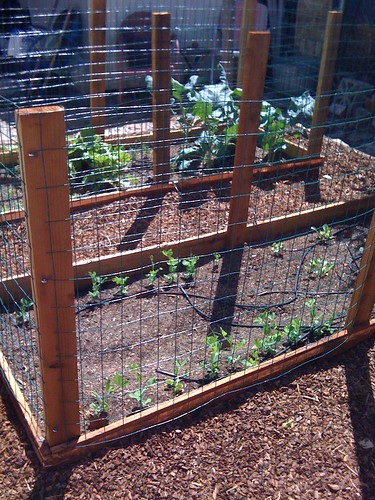
we try to have our backyard reflect our tastes and needs. so my husband built these fenced in vegetable areas. we have dogs and cats and so we wanted to be able to protect the plants from animal [and kid] invasions. he also set up a drip system that runs on a timer so that we can be as economical as possible with our water usage.

tomatoes in a bathtub


in the spirit of re-using we put our tomatoes and anaheim peppers in an old clawfoot tub that we rescued from a neighbor's remodel.


Newspaper pots
Originally uploaded by Clementine's Shoes


the other day i was looking at Clementine's shoes' blog and she had posted some newspaper origami pots she had made for seedlings.


Newspaper pots
Originally uploaded by Clementine's Shoes


what a great idea i thought. if we are going to try and have carrots and onions and broccoli and fava beans and lettuce going throughout the winter starting from seed we'll have to start plants continually. i was trying to think of an easy, eco-friendly way to do this lo and behold ! here it is. we get the Sunday Times - why not turn it into our start pots?? She links to it in her post, but here are the blow by blow directions . i have saved a bunch of the plastic started pots you get from garden stores, but those eventually fall apart - and i personally hate the "bio-degradeable" brown started pots you can get. they always seem to crack and break and never seem to fully degrade. newspaper is the ticket!

when i emailed Clementine's Shoes to ask her if i could re-post her pictures she mentioned that she also knew that people used toilet paper rolls as starter pots too.
indeed they do .

happy gardening. i can't wait to taste our beets!

August 27, 2009

Urban Foraging

foraging: tomatoes

I often fantasize about giving up the city life with all its conveniences and moving to the country to live off the land. I will have a thriving organic garden and happy goats.

When I yearn for this idealized future, I watch a BBC show called River Cottage. The show chronicles Hugh Fearnley-Whittingstall's journey from a full-time city dweller to a countryside farmer. Through a series of episodes he demonstrates how interdependent the farmer (played by him) is to his neighbors, the community, the land, and the countryside. He paints an idyllic life in the picturesque English countryside- you know the one…think All Creatures Great and Small.

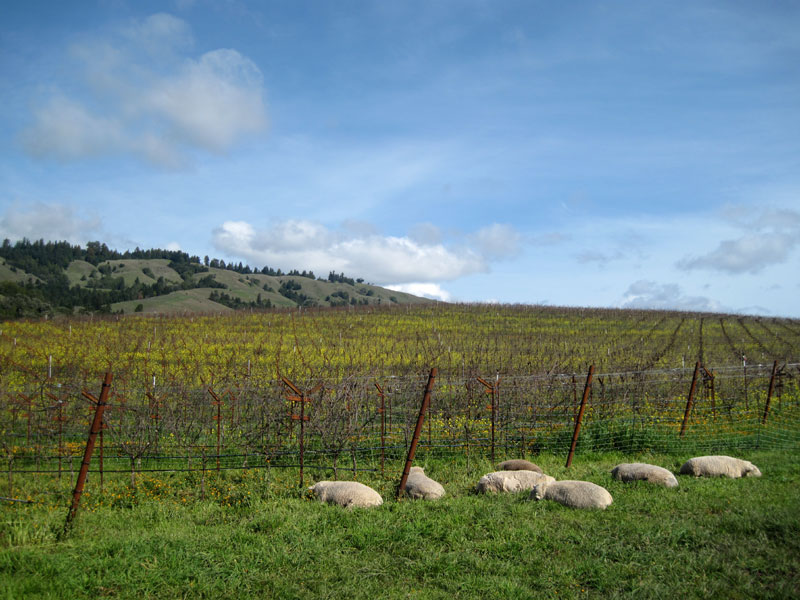
searanch: navarro- sheep!

My city life enables me to practice the profession I love, draw inspiration from the cultures around me, and allows unparalleled convenience to whatever strikes my fancy. What was missing from my life was that the cityscape seemed like a vessel for things I want to consume. I felt disconnected from the land around me. Although I have a tiny garden of tomatoes, peppers and various herbs on our small patio above the street, it was learning about urban foraging that scratched that itch.

foraging: counter

It all happened one night when I was watching the episode The Wild Larder. In this episode Hugh and his cronies scour the countryside, hills and rivers foraging for wild food. They hunt for mushrooms, wild greens (ramps, watercress, and such), fish and game. The bounty of a healthy environment spills beyond the confines you set for it. Hugh made me realize that I had been myopic. Bounty lays beyond your small holdings in your great surroundings - my perception just had to change. It was in that moment that I realized the similarities my current city life shared with my dream of a country farmer life. My patio garden could be my small holding and the urban fabric beyond could be my Wild Larder.

july12: bfast

Urban food foraging involves identifying foods within your city- most often fruits and berries, which are edible and free for the picking. The resurgence of urban foraging is relatively new and goes hand-in-hand with the resurgence of urban farming.

There are numerous websites on the practice foraging, including foraging.com, but the one of the best is the Urban Edibles out of Portand. Urban Edibles helps foragers navigate the unfamiliar physical and ethical landscape.

Here are some guidelines they list:
  • Don't take more than you need. A tree full of ripe black cherries can be really exciting but how many will you use before they go bad?
  • Ask permission before you pick. We do not condone unsanctioned harvesting practices or trespassing.
  • Pick in a balanced and selective manner. The last thing we want is to damage the sources from which we harvest!
  • Watch out for pesticides and other contaminants. Paint chips, pesticides, motor oil spills and even car wash runoff can affect the quality of the sources you pick from.
sept2

July 30, 2009

(sub)urban chicken keeping. part I

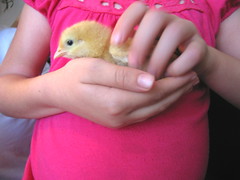
a little over a year ago, and after much consideration and research, we brought home three young chicks and started on a new journey as backyard chicken keepers.

peep

i must admit, i didn't quite know what we were getting into. i had a romantic notion of backyard chicken keeping - of gathering fresh eggs in the morning, and having my girls scatter feed in the yard while the chickens played at their feet. i also had an overwhelming desire to to revolt against the (sub)urban lifestyle so prevalent in los angeles. to balance out the media blitz my girls see everyday (even without television viewing) with some "livestock". finally, with the girls on summer break, and myself newly relocated to a home office - i thought the time was right.

we thought about it carefully, and decided to purchase the chicks from our local feed store, instead of through one of the many mail-order chick and pullet distributors. our neighbourhood. is hot. very hot. i was very concerned that chicks arriving to us in july from the east / mid-west would be shocked by the temperatures they were confronted with. our feed store gets their chicks locally. and did not pass on the young peepers easily. they were also concerned that we knew what we were doing and not simply acting on a whim induced by the cute fluffiness before us. i was impressed by their concern - their knowledge and support - and their offer of taking back a rooster, if one of the young'uns proved to be so inclined.

following procedure outlined in the many books in our chicken library, my husband built a "brooder box" in advance and we set-up in a corner of our dining room. we used an old floorlamp for heat and carefully monitored the chicks water and mash intake. it was thrilling for my girls to wake to these little peeps. and a little frightening watching how they would simply flop over and fall asleep!

1 - 2 - 3

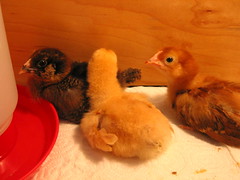
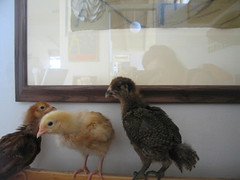
of course we named them: little red (a rhode island red) - the curious one; chick-a-dee (a buff wyandotte) - the little sister, always trying to get someone to play with her; and annie (an aracauna, we think) - as in oakley - (or fluff, depending on who you ask) who is very brave, a great performer, but also very cautious.

the chicks grew quickly, their feathers started to come in, and little combs started to appear on top of their heads. they were soon trying out their wings in flights from the box to the nearby table, or on occasion to an unsuspecting visitor's shoulder. their personalities started to shine, and they quickly won our hearts.

3 amigas

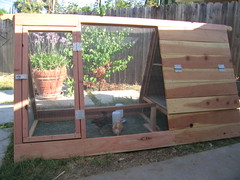
it was soon time for their move outdoors. after much research, we decided against a permanent coop, and opted for a "tractor" instead. the thought behind this being that we can move it around the yard, fertilizing as we go. we looked at what was available commercially (and were tempted by this), but felt that d could build one that answered all our criteria and was budget-minded as well. we needed a safe place for the chickens to sleep, with good ventilation (the henhouse) and a safe area for them to play and eat in during the day, with extra shade for our hot summers (the run). we also wanted to take advantage of the byproduct of all the food the chickens consume (and they do like to eat!). we settled on a variation of the many "ark" images we found. the droppings in the henhouse fall into bedding of shredded newspaper and all that can go straight into our composter, and the droppings in the run go right on our "lawn". the henhouse contains a perch for them to sleep on, as well as a nesting box, for laying. the run serves and protects them when we aren't home, thought they spend most of their time roaming the yard.

cooped up

for the most part, the romance is there. but it is so much more - and better - than i imagined. they started laying at about 7 months of age, and yes, we get, on average three fresh eggs every day. (chickens lay on a cycle of approximately every 28 hours - if conditions are right.)

three for three

but the best part i think has been seeing how my girls have taken to them - and vice versa. the chickens are very social, have a lot of personality, and are highly domesticated. i am never surprised to see a 5 year old tramping around the yard with a hen under each arm, or an 8 year old quietly telling a chook all her secrets.

Up next: The logistics of it all, the pros and cons to our urban "farm", backyard chicken resources, and answers to any questions you may have! (Please leave questions in the comments - thanks!)

July 23, 2009

Book Review: Farm City

growing.
Photo of her allotment garden graciously provided by Kim. Click the photo to see more of her garden photos on Flickr.

Within the first 25 pages of Farm City, I had laughed out loud numerous times and gotten teary once, a sure sign to me that this would be a good book. And it was. Novella Carpenter tells the tale of how she became an urban farmer, harvesting fruits, veggies, honey, eggs, rabbits, turkeys and pigs in an economically down-and-out part of downtown Oakland, California. She weaves research discoveries in with life discoveries, interactions with those around her, and her family history. It is an entertaining (guffawing on public transportation) and inspiring read, and it is intense.

Carpenter, like most farmers, I am guessing, has (or has developed) a certain toughness. She's a brave, can-do kind of gal. A pioneer. I admire her seeming ability to connect with all kinds of people and animals and yet retain a level of detachment. It was at times uncomfortable for me to read the descriptions of the killing of her meat animals. Her descriptions certainly demonstrate though, the huge effort it takes to carefully raise, kill and process an animal.

Now and then in my over my 25 years as a vegetarian, I have considered eating meat again. I would only eat meat if I could do it responsibly—knowing the animal was raised humanely and in a way natural to the animal (ie not feeding a cow corn for ex), knowing the animal was killed in a respectful way, and knowing neither the animal nor the meat have been trucked too many miles. I can fully appreciate the satisfaction Carpenter derives from eating and sharing meat that she has spent time, labor, struggle and enjoyment producing. The eating must become so much more meaningful, so much more thoughtful and valued, even ceremonial. Carpenter's tale proves there is much knowledge and wisdom to be gained from each part of the farming process. (Nevertheless, and despite enticing bacon and sausage aromas, I don't think I'll be converting to meat eating any time soon.)

Farm City is an engaging mixture of storytelling and information sharing. Living in the Bay Area, one hears so many rumors and sensationalistic news bits about the "bad" parts of Oakland. It is refreshing to get a more realistic and personal perspective on living in one of these infamous neighborhoods. Also fascinating are the tidbits about animal behavior/biology and about the long history of gardens and farms within cities all over the world.

With so many people struggling to buy healthy food, it is strange that public spaces, backyards and abandoned lots are not filled with edibles instead of (or at least alongside) decorative flowers. There could be so many more gardens and so much more fresh produce shared/consumed. Hopefully—especially if this economic situation continues—we will have another big Victory Garden-esque garden and farm b(l)oom. And actually, here in the Bay Area, San Francisco Mayor Newsom recently issued a sustainable food mandate that addresses the use of public space for food production!


Veggies growing in the SF Rainbow Grocery parking lot, above and below


Find out more about urban farming on Novella Carpenter's blog. Note her links to other urban farms. Maybe there is one near you...

Other potential summer reading:

Our Life in Gardens by Joe Eck and Wayne Winterrowd
Deeply Rooted: Unconventional Farmers in the Age of Agribusiness by Lisa Hamilton

(books found on Civil Eats, my favorite agriculture/food-related blog)

February 11, 2009

book review: fruitless fall


wanted to recommend fruitless fall by rowan jacobsen to you all. the book is about the honey bee and colony collapse disorder (CCD), which is a serious threat to the honey bee (and therefor to life as we know it). while the topic is frightening and depressing, jacobsen managed to completely engage me in his book. almost every page is filled with fascinating information about bees and pollination and how bees are essential to us for so many reasons. even the more scientific info is really accessible.

i recommend reading this book in conjunction with the omnivore's dilemma, because CCD is almost certainly caused by the effects of industrial agriculture. for me it reiterates the urgent need to transform our broken agricultural system. in fruitless fall, jacobsen examines the myriad of factors that have been considered in trying to figure out why CCD is happening. in the end, CCD is mostly likely due to a combination of factors including:

*pesticide, herbicide and fungicide use (and the complete lack of studies on how various pesiticides, etc. react/combine with each other to become potentially exponentially more harmful) (pesticide use is probably the most influential factor. did you know pesticide safety is determined by test results reported BY THE PESTICIDE MAKERS!)
*the transport of hives (trucked cross country and flown between countries)
*bees forced to feed on monocrops (like almonds)
*habitat loss (lack of competition with wild bees, lack of varied nutrient sources)
*use of corn syrup to feed bees
*climate change
*development of wild and farm land (blocks flower scents)
*noise

*possibly even the structure of traditional bee boxes.

jacobsen goes into detail about how all of the above affects the honey bee, and i think you will be surprised by a lot of what you learn about these factors and how they interrelate.

so good! now i want to read some books he recommends, including the forgotten pollinators.

let me know what you think/thought of the book!

bee links
pollinator partnership
bee spotter

cross-posted at mecozy

January 12, 2009

box of food links


(photo of the excellent book fatal harvest, from the chapter where they talk about CSAs)

i find myself getting more and more into food/farm books/issues. here are some good links i've come across lately:

civil eats "promotes critical thought about sustainable agriculture and food systems as part of building economically and socially just communities." (i also love their logo.
)

local harvest is a great place to find sustainable farms and CSAs near you.

organic consumers association is a politically-focused site that posts great articles (from various sources). their millions against monsanto page is super informative and important. you can watch the documentary, the world according to monsanto here. i have only watched part of it, but that part was chilling and infuriating.

and finally, some action! if you are interested in getting america to move toward a more sustainable agriculture, you can sign a petition to get some good folks in beneath the agriculture secretary: food democracy now's sustainable dozen.

(cross-posted on mecozy)

November 24, 2008

abundance and revolution


Last night I watched this documentary on PBS about the Karuk tribe of California. They live along the Klamath River. The logging companies and the federal government’s fire suppression policies have almost destroyed the Karuk. The Karuk cannot gather their medicinal plants, make their traditional foods, practice their ceremonies, etc. like they used to, because the landscape, their home, has been altered so much. Fire suppression and the planting of fir trees has almost wiped out many of the native plants in the area. This also affects the river water (fir trees drain the water) and thus affects salmon and other river flora and fauna.

The Karuk believe that the earth provides everything we need. Watching this documentary, I recognized a lot of similarities between the Karuk’s values and those of the Slow Food movement. There is an understanding that ecology and culture are inextricable, and that the only way to maintain cultures is to respectfully and correctly manage the environment. This is also the only way the earth will continue to provide for us. This kind of value system is not an economic one, but a subsistence one.

Now when we’re in this big economic crisis, I think these values are vital for us to ponder. When we don’t trust that the earth and our community will provide for us all, we become greedy and we try to figure out ways to produce/extract as much stuff as possible at any cost. {As an example, industrial agriculture plants monocultures of crops, because in the short term that is the easiest way to produce a lot of food. This ruins the soil fertility however, which will not only make the land unproductive, but also endangers surrounding communities because the soil won’t absorb water. Thus when there is a flood, it is far more devastating. There are tons of examples how overuse like this not only leads to depletion of resources and the obliteration of biodiversity but also makes us much more susceptible to flood, fire, hurricane damage.}

In the book Plenty, the co-author imagines what the part of Canada he lives in looked like before Columbus. The abundance of animal and plantlife described struck me. Our earth has become and is fast becoming less and less abundant because of our incorrect management of the environment, our shortsighted overuse/exploitation of resources and our blindness (or willfull ignoring of) how we are connected to all creatures and plants. In the focus on profit, we (industrial societies) are killing cultures, we are killing plant and animal species, we are endangering lives by making communities more vulnerable to natural disasters, we are polluting water. The list goes on and on.

I worry that in hard economic times, people will look to the short-term solutions that (the agriculture, oil, etc.) industries offer, instead of re-evaluating our capitalist value system. But I hope having a visionary leader (in America) who seems to want us to fight for community and for what is right, might inspire us to work towards just and respectful ways of living on and sustaining this earth and the earth's abundance.

Cross-posted on Mecozy.

November 7, 2008

to the next farmer in chief


a teacher of mine tipped me off to this rad article by michael pollan to our president-elect.