Showing posts with label clothes. Show all posts

December 3, 2010

The 3 R's - Part 3

I posted in June on reducing and in September on reusing. Now it's time for a post on recycling. I always think that reusing and recycling aren't all that far apart, but I guess the difference is that reusing means using something again for the same purpose, while recycling is making it into something entirely new. Which brings me to:


This is a great little store located in the heart of Osborne Village in Winnipeg, Manitoba. Owner Andee sells awesome handmade goods, many crafted in Winnipeg, and some created in the back of her store. She has a MySpace page, and Etsy site, and a blog, but none of these do her store justice. Which is a shame because she's doing something really unique and wonderful in this city.

She's a fibre freak (since I don't really know her except from shopping in her store, I hope she won't mind me calling her that) who is constantly creating new things from old. Clothes, bags, belts and accessories - all from recycled fabrics and yarn. Plus she crochets. And her inspiration is her mom. How nice is that?

Christmas is just a few weeks away and I always feel stressed out and heavy at this time of year. But supporting local crafters and artisans takes the edge of those feelings. It also helps me not have a meltdown over all those knitting projects that aren't quite done!

Wishing you joy and peace and lots of craftiness.

November 19, 2010

If the pants fit, wear them out.

Clothes and fashion are topics that pop up regularly on Sew Green, and with good reason. We all dress ourselves on a daily basis (and many of us are also dressing our children), and I'm sure we notice and respond to what other people have dressed themselves in every day too. But it seems to me that clothing and fashion are inherently not about sustainability. Core drivers of the fashion industry are consumption and change- constantly throwing out the old, and buying the new. And the reality of wearing clothing is that it wears- few (if any) garments have a unlimited lifespan.

When Shash did her recent post about Slow Clothes, I had also been thinking long and hard about the state of my (and my family's) wardrobe, and doing a little bit of sustainable fashion research. One of the web resources that I found that I felt was quite useful, in regards to clothing yourself and your family more sustainably, was this post at Planet Green, which I found via Treehugger. There are many ways of approaching a more sustainable wardrobe, and this post succinctly captures 10 key ideas. Some might tie in with things you already do, others might fire your interest and inspire you to research, think or take action in a different way. Their tips cover a number of approaches to shopping and thinking about your clothing needs, caring for your clothes, and disposing of them when you're done.

Number 2 on their list (love your duds) inspired me to sit down and do some mending to some toddler clothes. I received a couple of pairs of good quality pants from a friend when she was clearing out her son's wardrobe a year ago. In addition to being worn by her son for some time, they've now been worn by my son for most of the year too. I have to say we love them. They have a great feature that gives them true trans-seasonal functionality- the bottom of the leg can be zipped off so they transform from long pants into shorts (particularly great when you live in a place that is famous for offering four seasons worth of weather per day). However, after so much wear I noticed that not only were the hems well past being well worn, but the fabric was starting to fall apart at the knees.

As they still fit really well, and are so handy to have, I decided to give them a bit of a life injection by patching the knees. We pulled out some fabric scraps from the scrap tub and I stitched them over the worn places with rows of three-step zig zag. Definitely not perfect, but perfectly appropriate for casual toddler play pants I think. While I was in the swing of it, I also mended a fraying linen tea towel (the only kind of tea towel to have) and a few holes in some toddler T-shirts (must keep a closer eye on him when he's playing with his scissors!).

I hope the Planet Green post also inspires you in some way. Some other inspiring links and resources I have come across include:
  • ecouterre which provides posts in a range of fashion and beauty issues and news items, and whose mission page highlights some hard core facts about the environmental impact of clothing and the fashion industry; 
  • How big is your eco, an Australian site listing local fashion labels including their eco credentials in relation to fabric, care, packaging or carbon footprint. It's made me more aware of some local designers and manufacturers(like Otto and Spike, and Gorman) who I'm now keeping an eye out for on those occasions when I am shopping to buy something new;
  • This article on Zero Waste Fashion, an idea which is slow to catch on in the mainstream fashion industry, but it perhaps something that home crafters and sewers are in a great position to employ;
  • And not far removed from the idea of Zero Waste Fashion is the inspiring work of Sew-Green contributor Lisa Solomon, with her creative side project MODify/d, making use of fashion industry "waste" and transforming it into something beautiful and useful.

September 26, 2010

slow clothes


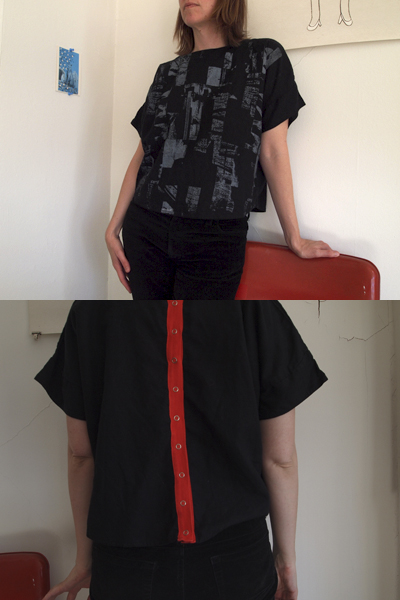
My clothes are disintegrating. Most are over ten years old. Moths have taken advantage of some of them as the clothes have hung on the line to dry. I’ve come to dislike shopping for clothes, even if I appreciate beautiful patterns, textures, cuts. I no longer get a consumer high if I buy a shirt from H+M. The last three years, I’ve bought almost no clothing (save bras and bathing suits) from big or corporate stores. But I’m finding it hard to find hand made, well crafted clothing that I like, even in DIY San Francisco. And I just would rather spend my money on a good cheese. But it is time to start replacing my beyond mending clothing. So my plan is to slowly build a long lasting wardrobe, one well crafted, ideally sustainably sourced/made garment at a time—one item a month.

Above is the first shirt I purchased under my slow clothing plan. The shoulder line isn’t flattering on me, but I really like the print, the red stripe down the back, the feel of the fabric and the company. Seems like the designer is thinking deeply about what she’s making and how it’s being produced—she’s a craftsperson.

Recently I read The Hidden Wound (1968–69 and afterword in 1988) by Wendell Berry, in which Berry writes a bit about craftspeople, though the book is primarily about race and community in the US. (Berry writes about his own experiences as a white boy growing up around black workers/friends on his family’s farm and about how those early experiences continue to inform his thinking about race relations and much more. The book sparks a lot of thought.) Here is the passage about craft:

The industrial laborer subserves an economic idea instituted in machines and in mechanized procedures. This is as far as possible from the work of the traditional craftsman or artist, whose making has never resembled what we now call “manufacture,” but is a cooperation and conversation of mind and body and idea and material. The true craftsman does not waste materials because his or her art involves respect for materials. And the craftsman’s products are not wasted because by their quality and durability they earn respect.
...
The great enemy of freedom is the alignment of political power with wealth. This alignment destroys the commonwealth—that is, the natural wealth of localities and the local economies of household, neighborhood, and community—and so destroys democracy, of which the commonwealth is the foundation and the practical means. This happens—it is happening—because the alignment of wealth and power permits economic value to overturn value of any other kind.

He goes on to mention what government could do to promote the improvement of communities and protection of the natural world. And since the government will not do what it takes—will not dissociate from corporate power—it will eventually come down to us to restore community life.

From reading the above bits, I think about how sitting in front of a computer all day at work (which, in the interest of full disclosure, for me is a place with altruistic intentions whose work is funded in large part by corporations) I miss that cooperation and conversation of mind and body and idea and material. My body tells me this regularly. It wants to move around more. My hands want to build and shape and fit, not just click. I think about how the powerful food industries block regulation and information that would (among other things) improve food safety, and about how most consumers only count the monetary cost of food (instead of also considering the toll of industrial ag on people and land ). I think about how as the climate crisis snowballs (bringing storms and food and water scarcity), we will be forced to rely on our communities, our local farmers. our craftspeople and friends. I think about how the erosion of our communities and the misuse of nature (through natural resources depletion, industrialism, pollution, “free” trade) is largely what brought on climate change in the first place.

So yeah, slow clothes in addition to slow food.

June 10, 2010

Refresh your wardrobe on the cheap

A few weeks ago, as I was looking at the clothes I have in my wardrobe for Spring/Summer, I came across a few tired old favourites. Items of clothing I couldn't bear to part with (or put in the scrap fabric bag), but didn't wear any more, for one reason or another. Being perpetually skint* has a way of making you more creative with what you have. One old Guns 'n' Roses tee got an Alabama Chanin makeover. One cotton sundress had its cap sleeves removed and its broken elastic waist moved and re-elasticised. A check tunic top had its shrunken cap sleeves removed and a few other pieces had minor repairs (buttons sewn back on, holes patched up). I'm wearing all these clothes with pride again, just like when they were new.

*That's British slang for "penniless", "broke" or "poor" -- don't say I never taught you anything. Check out the Cockney Rhyming Slang website for a really good laugh. (:

Of course, there are a number of environmental benefits to revitalising old clothes, so I thought I'd share with you a few simple alteration techniques. Don't worry, as long as you have a needle and thread, pins, sharp scissors and an iron, you'll be OK (although a tailor's tape and a fading fabric marker will be very good investments too). In case you don't know much about the anatomy of a garment, here's a few Wikipedia definitions for you:
  • Hem: To hem a piece of cloth (in sewing), a garment worker folds up a cut edge, folds it up again, and then sews it down. The process of hemming thus completely encloses the cut edge in cloth, so that it cannot ravel. A hem is also the edge of cloth treated in this manner.
  • Seam: ...the stitching that joins two or more pieces of fabric.
  • Dart: Darts are folds sewn into fabric to help provide a three-dimensional shape to a garment. They are frequently used in women's clothing to provide a fit that closely follows the shape of the wearer.
This is a vintage Laura Ashley dress. It was my mum's, and I've been itching to give it a makeover for a couple of years now. It's a UK size 12, one size too big for me, which makes it perfect for altering. I'm going to take you through what I did with it yesterday to make it into this:

The first step is to decide what needs changing. Put the garment on and take a good look in a full-length mirror. I was keen to preserve the gorgeous details on the body of this dress (the piped seams and beautiful scalloped neckline), so when I decided I needed to nip in the waist, I decided on the side seams (the ones directly under my arms). The sleeves wanted to be shorter. A general rule with sleeves of any size is that the eye will be drawn to your body at the point they stop. These sleeves stopped at an awkward point somewhere between my bust and my waist -- lengthening them would be a nightmare, so bust it is! Then there was the skirt's hem. It was "frump" length. I like the skirt to fall just above the knee - the perfect length, or at least the most versatile, for wearing bare-legged, with jeans, with leggings, with tights & biker boots, etc. So that meant about 10" had to go.

Because of the masses of fabric in the skirt (94.5" around!), that was the biggest job, so that's where I started.


Altering the hem:

I turned the dress inside out and laid it on my sewing table. I then used my tape measure to fold the hem up 27cm, just over 10", and added a row of pins 3cm or 1.25" up from the fold and about 3" apart, to mark a line to cut. Once this was done all the way around the hem, I cut off the extra fabric, using the line of pins as a guide. It's important that you don't just cut a straight line across the garment, as hems are often not straight lines, even though they may look it!! Measure carefully up from the existing hem. :)

The next step is to press the hem. Still with the garment inside-out, fold the now raw edge up 3cm/1.25" and iron it down all the way around. When you get back to the beginning, fold the raw edge under itself so that it is completely enclosed and press. Do this all the way around again, adding a pin every few inches to keep the fold in place for the next step.


Note: I stitched this hem by hand, in keeping with the original hem. If you have the choice of sewing by hand or by machine, then just remember to be sensitive to your garment. If I'd slapped a row of machine stitches along this hem, it would have ruined the integrity of the dress. However, for other dresses I've altered that was exactly what they wanted. Many machines will do a "blind stitch" which gives the same outside look as a hand-stitched hem, but (on my machine at least!) you have to fold and press the hem just-so, which can be fiddly. If in doubt, test on a piece of scrap fabric!

Back at the sewing table, thread a needle (this thread should be the same colour as the original thread!) Garment still inside-out, make two or three small stitches on the top of the hem fold only. This just locks it in place. Now for the first stitch: about every 0.25"/5mm, make a tiny vertical stitch down that pierces just the outer fabric on its way out, then pierces the top of the hem fold on the way in (so it goes through 3 layers of fabric). The stitches on the inside of the fabric should look long and slanted (like a "\" turned 90 degrees clockwise) and those on the outside should be tiny and vertical.

Just continue until you come to where you started and you're done! When you reach the end of your thread, lock it in place (two or three small stitches on the fold, on top of each other) and start with a new length of thread.

This process is the same for sleeves, but instead of turning up 3cm of fabric, turn up about 2cm (just under1").


Taking in the seams at the waist:

This dress fit well at the bust, but was saggy around my waist. By adding a row of stitches just a short way in from the outer seams, I nipped in the waist for a much better fit. Here's how.
Sorry, this is the part where you look like an idiot for a while. Put your garment on inside-out. Trust me. Use your fingers to pinch the side seams at your waist (the smallest part between your bust & hips) until it feels comfortable and looks even. Put a couple of pins in either side. This will give you a stitch guide. Take the garment off (phew), and use a tape measure (or ruler) and pins (or fabric marker/tailor's chalk if you have it), mark out where you will stitch the seams. Make them as symmetrical to each other as possible. The line should start and end on the original seam line, otherwise you will end up with unexpected tucks in the fabric.

Stitch along this line (I used my machine, but a backstitch is your best option if you're sewing by hand). Now turn your garment right-side out and try it on. If the fabric is now wrinkled or puckered, you should let the seam out a little on that side (make a new line of stitches further out, then unpick the old one using a stitch unpicker or embroidery scissors). When your seams are in their final place, add a row of zig-zag stitches outside them if you can, just to reinforce them. Unless the seam now looks really bulky when you put the garment on, there's no need to cut the excess fabric off. In fact, if you leave it on, you can adjust the seam again if you need to in the future.

And you're done!

For inspiration, have a look at the New Dress a Day blog.

What are your alteration tips?

Maimy x

P.S., check out my new collection of handbags on Etsy! ;)

September 3, 2009

conscientious consumption & donation

Consumption is a tricky issue when it comes to living green.  The greenest option is really, not to do or buy anything.  But our economy is based on shopping, livelihoods are based on shopping, and most folks really like to acquire new stuff.  But how much stuff is enough?  It is probably a lot less than we think, and a lot less than we have.  

Teaching conscientious consumption to myself:
My mom is a shopper of the worst kind; charge cards for different department stores, a first name basis with salespeople in clothing departments, and a full closet & a mountain of debt.  I remember her telling me once, if you find something that fits, buy one in every colour.  I don't have the luxury of that kind of reckless income, and the older I get, the more frugal I have become.  I met my parents at the mall yesterday- to take my daughter on the carousel and so my mom could make some returns.  She runs into the store, and I follow in a few minutes later to find her buying 4 eyeshadows at the counter.  We have one of those "freaky friday" moments where I say "how many eyeshadows do you need? You only have 2 eyes!".  So anyway, I wasn't raised to buy conscientiously, I learned on my own.  And more importantly, that is what I want my child to learn.  

So one major project I have implemented is "sell to buy" for clothes.  If I want to purchase a clothing item, I have to sell clothes that I already have.  And I have more than enough [my background catches up with me].  Its a small step, but it allows me to think a bit more about the actual cost of what I own, and makes shopping more of a rewarding challenge.

I found a jacket that I adored, but was on the pricey side.  So I waited a few days to see if I even remembered it, and if I still wanted it.  I did.  So I went through my closet and pulled together a large bag of clothes that I took down to Buffalo Exchange.  Luckily there is one just a mile from me, so its an easy option, but there are all kinds of consignment shops, etsy, ebay, craigslist, and other options for reselling clothes.  I was able to make 50% of the purchase price of the jacket from my reselling.  Sold.  Not only do I make a bit of money on my old clothes, but then the clothes are resold at a massive reduction on the original price, no new items are produced in the process.  Donation is also an option, but in Southern California, thrift stores are scoured by resalers who buy cheap and mark up extensively [Melrose Ave. I am looking at you!].  Unsold clothes are all donated anyway by Buffalo Exchange.  

My rules for buying conscientiously: 

With every purchase I ask myself the following questions to encourage conscientious consumption [since it doesn't come naturally to me]
  1. Do I need this?
  2. Can I afford this? [not on credit!]
  3. How does this purchase impact the environment?
  4. Do I have something just like this already? [do I need another grey tshirt?]
  5. Can I get this borrowed or used?
  6. Can I make this myself?  Will I make this?
  7. What can I sacrifice in order to buy this item?
  8. Would I rather have money in the bank or own this item? [HUGE question- and it usually is the major dealbreaker]
  9. Who does this purchase benefit? [small business owner? large corporation?]
  10. How long do I need to think about this purchase before making it? [it is easy to get caught up in store displays & merchandising- sometimes walking away will make you forget all about it]

With the holidays approaching [I know, I know! I am in retail and we buy for holidays in July] start to implement a conscientious approach to consumption and enjoy your possessions & purchases even more!

Teaching this to my daughter:

For my daughters first birthday, we did a party with 3 other 1 year olds and in lieu of gifts we collected toy donations for the Miller's Children Hospital Pediatric Cancer Ward.  All the kids were born at the hospital and we wanted to give something back.  I called the hospital and talked to them specifically about what they needed- plastic toys for 0-6months to be used in the playroom, preferable music toys.  In the invitation we wrote out this detailed request and set up a table and sign for the party.  
People were able to buy gifts for kids, we didn't come home from the party with bags of gifts [I had been to a few 1 year parties and the amount of toys is ridiculous!].  My daughter is thrilled with empty boxes and plastic cups, so that is what she got for her 1st, and the hospital received a wagon of gifts.  I plan on doing that every year.  

August 13, 2009

adventures in green babyhood

bootie2

Being a professional environmentalist as my day job, I always figured that when our baby came along, I'd just naturally be the greenest parent in town. No stress - I'd just know which products to buy or avoid, how to find them, and I'd have boundless energy to explore the greenest ways to raise our Little Pea. Ha, ha. I do know some wonderful parents who fit that description, but despite my best intentions, and my own expectations, I am sadly not one of them.

But I do really, really care about sustainability, the environment, and in particular how pollution affects children's health. So I am struggling to make this green parenting thing work. For those like me, here are a few things I've been able to make work. And for those who fit the green parent profile better than I, please please share some of your suggestions in the comments!

breastfeeding
Breastfeeding is absolutely the most affordable and sustainable way to feed a baby, not to mention the healthiest. The decision to breastfeed is probably the most important step we've taken in terms of sustainable babyhood. I realize that there are many reasons that some families are not able to breastfeed, and nobody should feel guilty if they can't, but I am very grateful to be able to feed the Little Pea this way.

Baby formula is a multi-billion dollar industry in the United States, is typically made from soy or cow's milk. Soy and dairy are both huge agricultural industries with all the associated pollution and energy problems that you already know about, not to mention all the packaging, shipping and waste that buying such a product entail. How wonderful that our bodies almost always make this product unnecessary!

gifts
People always want to give you baby gifts, no matter how much you protest or try to avoid it (at least, I tried to). I didn't want people to buy things we didn't need or want, or that contained toxic plastics, etc. But I also found it very hard to say to people, "Don't get anything, but if you do, you have to do a lot of research and spend a bunch of money to get us something that meets our values."

Thankfully, I have an awesome sister, who organized a green baby shower. She asked people to give us hand-me-down or hand-made gifts, or if they bought something, to please consider organic and non-toxic products. It worked beautifully. Many of our friends and family gave us copies of their favorite books from their childhood, something wonderful that they made, a big box of hand-me-down clothes from their kids, or something great they found at the thrift store. We also got lots of organic blankets, burp cloths, etc. I could never have asked for this (there's something too Puritanical about me), but my sister did a wonderful job with it.

stuff
Before the Little Pea was born, we got some great advice from a friend: to never, ever turn down an offer of hand-me-down baby stuff from friends or family. As a result, we have more baby clothes than one baby could ever wear, and we've had to buy almost nothing. Friends have given us a crib, co-sleeper, stroller, high chair, tub, baby seats, toys, books, blankets, towels... it's amazing how many times these things can be used, by so many babies, before they ever begin to even show any wear. We are lucky to have a big community of friends with little ones. Even if you don't, because your family is small or you're new in town, you can get much of what you need from thrift and consignment stores, saving oodles of money and reducing a lot of waste.

diapers: We've covered this area a lot already on Sew Green -- check out earlier posts on diapering here and here.

I am really interested in other folks' strategies for green babyhood. And I'm particularly looking forward to learning more about stuff like making baby food, toys, and how to communicate your values to kids' friends and grandparents. No parents are born knowing how to do all this stuff, and supporting each other has been critical for me - thanks to all of you for sharing what you've learned, too!

March 17, 2008

swap style

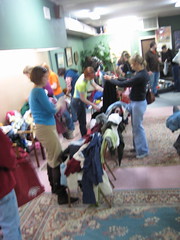
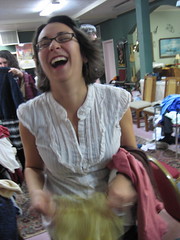
Ever since college, a group of our friends has been getting together a few times a year for a clothes swap. I love the clothes swap, particularly now that I'm not buying anything new (thank you, Wardrobe Refashion!). This time I came home with a great haul: several tops to wear to work, a great skirt, some short pants for spring, an orange vintage crocheted blouse, and some great socks for making sock monsters. And nothing beats the price: free!

If you've never been to a clothes swap and you'd like to try cooking one up with some friends, here's what you'll need to do it:

swap1

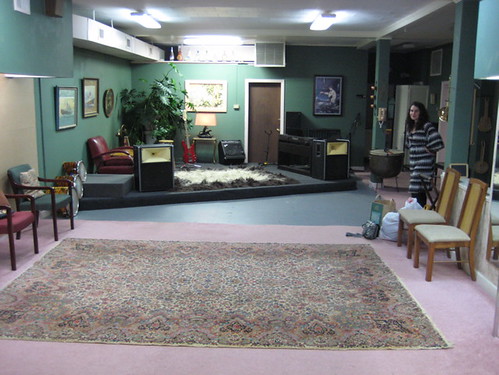
Space. We've always had the clothes swap at someone's house, though lately it's gotten quite large and we had to move it to a bigger venue (in this case the performance space at a wonderful music shop in downtown Raleigh). As long as you've got a main area for laying out clothes, and two spaces for dressing rooms (one for fellas, one for ladies), you'll be all set.

swap4

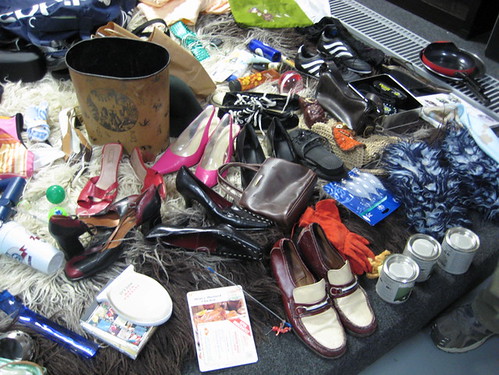
Clothes. The price of admission is at least one clean garment in good condition. I usually have a shopping bag or two; some folks come with just one item and some come with huge bags full. At a clothing swap last fall, I scored a beautiful black crepe suit made for a friend's great-aunt in Paris in the 1950's.

swap6 swap5

A cooperative spirit. This is not a competition, it's a free fashion night. The most successful swappers hunt in teams. If you dig up the perfect skirt for your friend, toss it to her. She'll do the same for you.

swap3
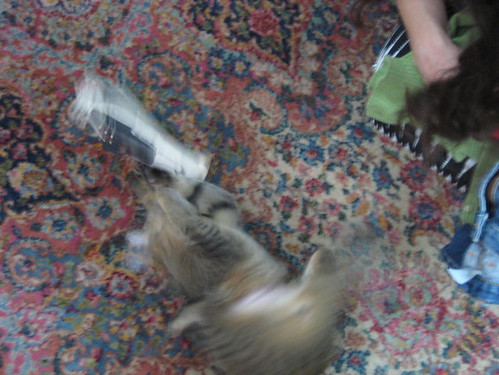
cats and catnip are optional at most clothes swaps

Basic rules. This is the least fun part, so I prefer to minimize rules, but suit yourself. The way we do it is, start at 7PM. Lay out the clothes by type (pants, skirts, jackets together, etc). We never used to segregate clothing by gender, but as this thing has grown quite huge, it's starting to seem like a good idea. Don't start swapping until it's time... time is around 7:30. Keep swapping until your appointed time, say 9 PM. No limits on how much you can take - just as long as you actually plan to use/wear it. Then everyone helps bag up what's leftover to take to the thrift shop.

Snacks. Not required, but highly recommended. We do it potluck-style, and the fare ususally consists of chips, salsa and some beers. The quantity of beer usually correlates directly to the zaniness of outfits that people start modeling as the evening goes on.

swap7 swap8

Clothes swapping is a lot of fun and very economical. It's also a delight to see your old favorite clothes getting a second (or third, or fourth) time around on your favorite people.

February 28, 2008

a little political refashioning

Since this is a non-partisan blog (as far as I know), I won't get into any electioneering here. But I wanted to share a little project with you that some of you Sew Greenies might be interested in: an online t-shirt making rally for your favorite candidate!

I signed up recently for the current round of Wardrobe Refashion because I've decided not to buy any new clothes this year. But that meant I couldn't buy a campaign T-shirt, and I have to say that I'm one of the more head-over-heels supporters of this particular Democratic candidate for the US presidency... (I'll let you draw your own conclusions about who that might be). So anyway, I decided to make my own T-shirt.

Then I thought about it and realized that some more folks might want to make their own shirts too, so I'm starting a rally! If you're curious, come check it out! We're designing and making our own shirts... repurposed, thrifted, recycled and/or hand-made shirts only, with your own designs!

Sign ups are going on now through the March 11 primary, and rally participants will share their creations on Flickr... winners will be chosen on the same date as the NC primary (my home state) on May 6th. There will be exciting crafty prizes for the winners!

If you want to do this but support a different candidate [or live in another country or something ; ) ], feel free to take this idea and run with it. There's plenty of craftiness to go around!

October 30, 2007

Like a Junky...

It is I, your ever-delinquent eco-fashion writer Amber Clisura, here to give another thrilling installment in the greening of your wardrobe. Please, first and foremost, fellow Sew Green contributors, accept my apologies for being such a bad poster. My life has taken a series of crazy turn in the last 3 months that it is a wonder to behold me standing up. But now on to something important - clothing.

A while back I had the pleasure of interviewing Anne and Kerrie, the two masterminds behind the UK Based Junky Styling. Junky has been turning out amazing clothes that have been recycled, reused, rethought as well as combining industrial jobber/remnant fabrics that would have just been thrown out into their line. (A jobber/remnant fabric is yardage that is used commercially for fashion but whose remnant, after production use, is too small to resell to a fabric store for public consumption.) From skiwear to evening wear these two women have designed it all. Innovative and challenging, their clothing evokes a sense of history without being lumped into "vintage". Couture and streetwear that truly redefine an idea of what a 21st century eco-conscious woman is and how she should dress.

(L) Annie and (R) Kerrie. Two wonderful women with one of the
most incredible labels I've seen in a while.

While in Paris for Pret a Porter I talked to them further about the eco-fashion business and their upcoming 10 year anniversary show at Dray Walk in the heart of London’s alternative design neighborhood.

Here is part one of a two part interview.


Many people think that in order to be considered an eco-fashion designer there is so much you have to learn before you can even begin to grasp the work. What inspired you to start Junky? Were you already interested in the environment when you started the company?

We began because we wanted to dress differently. Initially, it was all about unique design, and we were able to achieve this through cutting up clothes that were second hand. We started because there is nothing worse than being in the same place and same dress as someone else! We didn't study for it and it the environmental relevance was there, but the design was at the forefront.

You’ve received a lot of attention from the fashion press in Europe but how do you feel your impact has been received so far?

Nominally - We are just a small spec on the fair-trade horizon, but one nevertheless that Vogue's called 'high fashion street couture', so we're happy with that !

A lot of people are asking how to give back, how to really make this sort of movement hit home. How do you feel you can push yourself even further? What are you hoping to achieve with your message of reuse::recycle::refashion?

Acquiring franchises around the world where we can train up the local community's to create and recycle in the Junky way, this would leave a
great legacy

Something that is even more challenging in being green in this fashion world is being a woman. What has been your biggest challenge as businesswomen? As a start up? Doing eco-fashion?

When we started 10 years ago the biggest challenge was to get people to take us seriously and believe that our idea was a viable business option, as opposed to just a hobby! For us, perseverance and a belief that what we were doing got us through a lot of disbelievers. Meeting other women in business has enabled us to succeed in our right.

Of course I have to ask what would you have done differently if you had a chance?

I think I’d have liked to have some kind of training/experience before we began...Whether it be tailoring, business, accounting skills etc – I just think it would of made life easier !

What do you feel is the biggest issue that you hope you can tackle with your clothing?

The sheer disposability of fashion - let it be known that you CAN wear clothes for more than 1 month. The idea that when you are tired of something you can change it up and wear it again and again.

Do you feel that there is space for people to not do anything to stop the environmental harm that is going on in the world?

We have all now acquired a heightened level of education/information about the environment. No matter who we are, or what life we lead. So there are no excuses at all left for us to not do what we can to make a difference. We believe that if everyone does something, no matter how little, a change will be made

Is there anything you can share with us about your design process?

There is nothing to tell ! We just create sustainable designs via our Junky's ethos - Timeless, deconstructed re-cut and completely transformed
clothing - forever

There is so much talk in the world today about trends and how “Green is the new black.” Which leads one to believe that Green and Eco will go the way of my Z Cavaruccis. Where do you think eco-fashion is going? How do you feel apart of that process/transit? Where do you want it to go if it isn't going in the direction you feel it should

It’s my belief that finally, eco-fashion is becoming more design lead. Which is .of course, the way forward. People can't be expected to purchase clothes solely on the basis that it's a green product; they have to feel and look good as after all, they are buying a style- a fashion. So this movement towards a more sophisticated cut etc is a very positive thing. This then backs up my theory that green fashion isn't just a fad - like organic food, you can't forget what you've learnt, so keep learning and moving the cause forward.

For me I know now that I’ve learned a lot of some of the small things I can do to make a difference how do you bring issues of greening into the rest of your lives?

We all here at Junky do as much as we can. From choosing and investing in green energy to recycling, we all try to live as sustainable of a lifestyle as we can.

June 12, 2007

Water World! And I'm not talking Kevin Costner...

Hello there Sew Greeners! It is I, your tired, blogging delinquent contributor Amber Clisura here to give you a little knowledge about the behind the scene concept for this month.

So one of the many of the things that we have been doing over here at SG is trying to create a framework around what it is that we are doing. Now this frame will sometimes compliment what is going on inside and sometimes it will just be a little thing that you, the Sew Green reader, should take an extra second to ponder for the month. This month we are starting (albeit it a little late) on the topic of:

Water

It’s everywhere. We need it to survive. We get headaches if we don’t drink enough of it a day. Our food needs it to grow and our planet needs it to be in balance. It is the life force from which all things come. So it’s pretty damn big isn’t it?

We are hoping that this month you can take a second and observe your own water usage. Be conscious of what you’re doing. Maybe you’ll change it, maybe you won’t. We aren’t asking for anything but for you to just be open to consciousness. For our part we are going to bring you some articles that talk about virtual water consumption, perma culture pools and me? I’m going to give you 10 things that if you start them right now, not only will you be more conscious of the water you use, you will save money and water. Two things you can never have enough of in this big bad capitalist world we live within.

10. Carry your own water bottle. There is much talk about the benefits of drinking water. So do it in your own bottle and save money and the environment! Not only that but try to drink out of something that isn’t a Nalgene or a plastic bottles. Though Nalgene bottles are better than most they still off gas like any other plastic – just slower. Try a Sigg or like me, a mason jar with a lid. A little heavier but safe as can be!

9. Repair dripping faucets by replacing washers. If your faucet is dripping at the rate of one drop per second, you can expect to waste 2,700 gallons per year which will add to the cost of water and sewer utilities, or strain your septic system! It’s simple – check it out here, here or here. Just tightening the faucet isn't helping your problem so take the hour and save your planet!

8. If it’s yellow… you remember the adage don’t you? It’s valid all the time not just in drought conditions. Is it a little gross? Yeah sure it is… but the amount of water you save is amazing. Tally it for a week. Many old toilets flushing use about 7 gallons of water! Some of the newer toilets (80s and 90s) use 3.5 gallons to flush. If your landlord is super diligent then maybe, just maybe you own a toilet that uses only 1.5 to flush. On the average though a household can go through 147 Gallons of water just in toilet flushing alone! That’s almost 1800 Gallons a year! Don’t have a landlord who wants to replace the toilet? Can’t afford a new one? Easy – drop a brick in the tank and that cuts out about a gallon. Two bricks knock out two! Put the bricks in a ziploc bag or other durable holder. Bricks break down and need to be contained in order to avoid plumbing problems. Look for displacement containers at your local hardware store.

7. Don’t shave your legs/face/arms/whatever while you shower. It took me a LOOOOONG time for this one. If you can only do it while you are in the shower then turn off the water while you do it. Those five minutes of water (about 300 gallons a month) that you saved you can indulge in somewhere else.

6. Take a bath instead of a shower. Fill the tub 1/3 full and then scrub a dub dub! Use the final burst of showerhead time to rinse off. Done and done!

5. Use your gray water on plants! Fill a basin full of water for your dishes instead of keeping the water running. When done, take basin outside and water plants. No plants outside! Hang a planter box off one of your windows and plant bee loving flowers! The bees need the help right now!

4. Water your plants deeply and not frequently. This sort of thing promotes drought tolerance and creates deep roots. Also get a soaker hose for larger yards. This cuts down on over-watering and helps get water quickly to the area that needs it the most.

3. Never pour water down the drain. Ever. Where can you use it? There is another place for it. In your toilet, in your yard, in your houseplants… you get the idea.

2. Wash your hands in a basin. Fill up a small bowl and later your hands in that instead of running water.

1. (And since I’m a fashion diva) Wash your clothes in cold water and hang dry. Yes, even those cashmere sweaters! Turns out they don’t need dry-cleaning at ALL! Nope. Cashmere is just like the hair on your head. Washing it in cold with some Johnson’s baby shampoo and laying flat to dry is the best way to care for your cashmere (or any wool) sweaters. There are hand washing instructions here, here and here (use cold not hot water, color safe bleaches or environmentally safe detergents.)

I hope that this inspires you just a bit to look around your water. If you find that it is all too much – then just tell someone else to read this article. Maybe they will try one of these items out and save just a dash more water than was saved the month before. After all, every drop counts.

May 30, 2007

I hate to rock the consumerist vibe BUT...

Hello everyone in Sew Greenland!

I'm sorry that I have been MIA as of late. I know that many of you have sent me emails asking what is going on with the eco-fashion world that I so suddenly stopped writing about. I know - bad Amber no organic leather belt for you.

Well work has taken me across the country and back several times in the last month and I've been swallowed whole (for all you keeping track, yes that increases by carbon footprint but our company is now investing in the funding of green energy to offset some of the damage that we are doing when we aren't being green!)

Regardless... I've heard from many of you that buying eco is something you really want to do but that the prices are really killing you. Trust me - I know. If I wasn't working for an organic company I wouldn't have 1/2 the clothes I do now... But I digress. I struggled about posting this for fear that it was a bit "consumer-y" but I thought that perhaps the fact that this company is a) local b) run by two local girls trying to make good and c) fucking awesome that it might excuse the consumer aspect of itself. For anyone who is in the bay area tomorrow my company is having our end of season sale!

If you print this out, bring it to our booth and make a purchase we'll also refund you your entrance fee! So that's like getting an awesome pair of jeans at over half off! If you forget then just mention "Sew Green!" to me and I will give you a high five and your entrance fee back with your purchase!

Ok - I'm done being a saleslady. Hope you are all living green!

May 15, 2007

Laundry Soap DIY

I've been buying Eco friendly laundry liquid for a while now but still wanted to look for an alternative as it's not cheap stuff and i want to reduce my packaging. So, i went out and bought a bucket, some pure soap and a bag of washing soda and came up with my own laundry soap!
Grate 1 bar of pure soap into a pan and cover with enough water to dissolve. Dissolve gently stirring continuously.
Fill the bucket with hot tap water, stir in the melted soap and a cup full of washing soda.


I found that the melted soap and washing soda didn't quite mix well so i returned it all to a large pan and stirred on a low heat until it was. Leave it to cool and it looks like this:Gloopy and blue!
I've been using it for a few weeks now and it works, my clothes come out clean and they smell fresh unlike with the Eco friendly laundry liquid that gave my laundry a funky smell.
From one box of soap and a packet of washing soda i will get 4 buckets full of homemade laundry soap, each giving around 25 washes giving me an average total of 100 washes. Needless to say, i won't be buying laundry soap anymore. It's probably best to add this laundry soap in the drum with the clothes if you have a front loader like i do, i found that there was some left in the drawer of my machine.
I'm also using the washing soda to wash my dishes, reducing my packaging further. 1 tbsp is enough for a sink full of water. I'm having a hard time convincing my husband that he doesn't need bubbles to get the dishes clean though. To try to combat this i have poured some of the washing soda into an old jar and put in a spoon with a label saying '1TBSP ONLY', i wonder if it will work?