Showing posts with label sustainable. Show all posts

December 16, 2010

Five Easy Ways to Reduce Waste This Holiday Season

Hello Sew Greeners! I'm sure you're all in the midst of your busy holiday preparations. I know I am.

We all know this season can be stressful in a whole slew of different ways. One of the things about the season that stresses me out is trying not to lose touch with my sustainable living goals as the madness of the holiday season ramps up. My husband always reminds me to go easy on myself because the world doesn't necessarily make it easy for us all to do the right thing. Nevertheless, here's my list of five easy ways I've reduced the amount of waste my festive season generates. Please feel free to post your own tips in the comments!

1. Give the Gift of Nothing.


Nothing tangible, that is. One of the best gifts my best friend Kat ever gave to me was agreeing to read one book of my choosing. She put no other limits on it, saying I could choose fiction or non-fiction, heavy or light, trashy or deep. Whatever I chose, she promised to read from cover to cover. After much thought I asked her to read Animal, Vegetable, Miracle by Barbara Kingsolver. That book changed the way I felt about food and inspired me to make small changes in how I ate every day, and I thought it might do the same for her. It did! Seeing her start to patronize local farmers' markets and even can her own spaghetti sauce and apple sauce in the fall, was amazing and exciting for me. The gift lasted for months! And if you choose a book that's available through the local library system, no one needs to buy anything!

2. Give To Someone Who Really Needs It.


This year my brother, sister-in-law, husband and I all agreed to give to charity instead of giving each other gifts. I'd initially suggested that we all donate to one charity, but my brother had the genius idea of choosing a different charity for each person, so we could have the fun of picking something uniquely suited to each of us. And it keeps up the all-important surprise factor.

One word of advice about this kind of gift giving. If you're going to pitch this to family members or friends, I'd encourage you to do it as early in the season as possible. Some people buy gifts early, and nothing breeds resentment like you swooping in with your awesome non-gift gift ideas when they have something wrapped up and stowed away for yo already.

3. If You Do Give a Gift, Use Reusable Wrappings.


I've been an enemy of wrapping paper for years, and this has led to me sewing my own fabric gift bags. These are the easiest things to sew, and a great beginner project. All you need is a rectangle of fabric. Hem one side and then fold the wrong sides together and sew up the other three sides. Turn it right side out and pop your gift in there. You can tie it closed with reusable ribbon or twine and attach a gift card to the ribbon. It takes almost no time and the bags can be used over and over again. I always buy Christmassy fabric when I see it in the fabric section at second hand stores, regardless of the time of year (you'd be surprised what shows up in July!) I take it home and wash it and stash it away for gift giving season. I also try to keep some of my bags every year so I don't have to make all new ones the following year. but people seem to like to keep them to give their own gifts in, which is fine too!

(My aforementioned friend Kat posted my more detailed fabric gift bag tutorial on her blog if you need a bit more coaching!)


4. Buy Local Everything.


Most people have to buy holiday specific things this time of year, whether they're giving piles of gifts or not. As tempting as it is to order everything off the internet, buying from a local store or local craft sales or local artists or local farmers, means that you control how much packaging your gift comes wrapped in. You can also ask questions about how things are made and shipped, and as a bonus you're supporting your local economy and the people in your community who depend on it. One of our local farmers' markets has a special Christmas market every year where you can buy both gifts (soap, jewelry, quilts etc) and food. I came home this year with a big bag of locally grown carrots, beets, Jerusalem artichokes, honey, and cranberries.

5. Clean Out Your Pantry.


This one only really occurred to me the other day. I had done a hurried, frazzled grocery shopping trip and came home feeling overwhelmed by all the stuff I still need to do as the holidays approach. When I started putting my purchases in the fridge and pantry, I realized that not only did I have minimal space in the fridge and pantry, I also had no idea what was taking up all that space in the first place. I got so agitated my husband had to put everything away for me.

The following day I got up early and went to work a few hours before I normally begin my days. This, plus skipping my lunch, allowed me to come home three hours earlier than normal. I spent those three hours cleaning out the fridge and pantry cupboard. I dug deep and found that I had bulk items in the pantry that I'd forgotten about. Everything got organized and put into my collection of glass jars. Now I am completely aware of what's available to me as I start my holiday food prep. There will be no over-buying and wasting of food. Plus I know what I need to use up and I can do that before it goes stale. And it had the added bonus of making me feel so much calmer about my kitchen in general. Win, win.

J.

November 19, 2010

If the pants fit, wear them out.

Clothes and fashion are topics that pop up regularly on Sew Green, and with good reason. We all dress ourselves on a daily basis (and many of us are also dressing our children), and I'm sure we notice and respond to what other people have dressed themselves in every day too. But it seems to me that clothing and fashion are inherently not about sustainability. Core drivers of the fashion industry are consumption and change- constantly throwing out the old, and buying the new. And the reality of wearing clothing is that it wears- few (if any) garments have a unlimited lifespan.

When Shash did her recent post about Slow Clothes, I had also been thinking long and hard about the state of my (and my family's) wardrobe, and doing a little bit of sustainable fashion research. One of the web resources that I found that I felt was quite useful, in regards to clothing yourself and your family more sustainably, was this post at Planet Green, which I found via Treehugger. There are many ways of approaching a more sustainable wardrobe, and this post succinctly captures 10 key ideas. Some might tie in with things you already do, others might fire your interest and inspire you to research, think or take action in a different way. Their tips cover a number of approaches to shopping and thinking about your clothing needs, caring for your clothes, and disposing of them when you're done.

Number 2 on their list (love your duds) inspired me to sit down and do some mending to some toddler clothes. I received a couple of pairs of good quality pants from a friend when she was clearing out her son's wardrobe a year ago. In addition to being worn by her son for some time, they've now been worn by my son for most of the year too. I have to say we love them. They have a great feature that gives them true trans-seasonal functionality- the bottom of the leg can be zipped off so they transform from long pants into shorts (particularly great when you live in a place that is famous for offering four seasons worth of weather per day). However, after so much wear I noticed that not only were the hems well past being well worn, but the fabric was starting to fall apart at the knees.

As they still fit really well, and are so handy to have, I decided to give them a bit of a life injection by patching the knees. We pulled out some fabric scraps from the scrap tub and I stitched them over the worn places with rows of three-step zig zag. Definitely not perfect, but perfectly appropriate for casual toddler play pants I think. While I was in the swing of it, I also mended a fraying linen tea towel (the only kind of tea towel to have) and a few holes in some toddler T-shirts (must keep a closer eye on him when he's playing with his scissors!).

I hope the Planet Green post also inspires you in some way. Some other inspiring links and resources I have come across include:
  • ecouterre which provides posts in a range of fashion and beauty issues and news items, and whose mission page highlights some hard core facts about the environmental impact of clothing and the fashion industry; 
  • How big is your eco, an Australian site listing local fashion labels including their eco credentials in relation to fabric, care, packaging or carbon footprint. It's made me more aware of some local designers and manufacturers(like Otto and Spike, and Gorman) who I'm now keeping an eye out for on those occasions when I am shopping to buy something new;
  • This article on Zero Waste Fashion, an idea which is slow to catch on in the mainstream fashion industry, but it perhaps something that home crafters and sewers are in a great position to employ;
  • And not far removed from the idea of Zero Waste Fashion is the inspiring work of Sew-Green contributor Lisa Solomon, with her creative side project MODify/d, making use of fashion industry "waste" and transforming it into something beautiful and useful.

September 30, 2010

natural stress relievers

Love Party coop 8
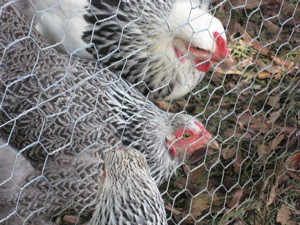
chicken-watching: a very natural stress-reliever

The last few weeks have been kind of stressful.

Job craziness, car troubles, all sorts of unexpected household repairs costing too much money, and lots of sickness in our house: it has all added up to way too much stress.

So I'm taking advantage of the fact that it's my turn to write a Sew Green post to give some thought to natural & sustainable ways to relieve stress. Perhaps it will help me chill out a bit.

When I'm stressed out, I am much more likely to do things that are awfully bad for the environment, like eating junk food and buying stuff I don't need. Driving instead of taking the time to bike where I'm going. Stuff like that. Just noticing that sometimes helps me to avoid doing those things. So what are the really positive things I can do to relieve stress? I'm going to make a list. And I really want to see what you all have to add to the list!

yoga
I love yoga. If I don't get to class every week, I really miss it. Yoga works out the kinks in my body and my mind. When I'm crazy busy, I don't make time for yoga at home. But if I can force myself to make a quiet space for a few minutes for a bit of practice, it helps so much. When I can hardly make myself do it (which is often), I like to use these short (15-20 minutes) streaming yoga videos from YogaJournal.com to guide me through a nice little practice.

cooking a meal
Cooking healthy food is one of the first things out the window when I'm feeling stressed and busy. But I also find that it's a great way to break the cycle, force myself to stop and do something wonderful that takes a little time and is good for me. Plus, if you're craving comfort food, making it yourself can be doubly relaxing.

reading
Nothing transports me to my happy place like a good novel. I sometimes find myself desperately racking our bookshelves for a new book to read when things get tough. I love to lose myself in another reality. And I find that reading before bed really helps me to fall asleep quickly and to sleep peacefully (if I can put my book down). Which brings me to...

sleep
Oh my gosh, what could be better than sleep?? I am an 8-hours-a-night kind of gal, but unfortunately my life is more like 7-hours-if-I'm-lucky. Nothing compounds my stress like sleep deprivation. The best thing I can do for myself is to go to bed early (preferably with a good book to help me off to dreamland).

exercise
Like most people, I need a little exercise every day to help me relax and sleep well. Whenever I start to feel really anxious and full of nervous energy that won't let me rest, it's a sure symptom of not-enough-exercise. The best thing I can do for myself in that situation is to drop everything and go for a long bike ride or a sweaty yoga practice.

time with friends
Today I attended a really frustrating and stressful conference. Luckily I had carpooled with a friend, and just venting together on the ride home helped so much. It helped even more that afterwards I went by her house and had a beer with her family in the backyard. We laughed and watched their chickens scratch around and generally chilled out for a little while. It wasn't a long time, but it sure was therapeutic.

So that's my list. I'd love to hear what some of your strategies are for letting go of stress! Now I think I'll go practice a few downward-dogs.

August 26, 2010

Green Housing: Getting the most out of what you have

 before (currently)

In my architectural day job I work on large projects, mostly University buildings. It might seem like a far cry from designing homes, but I realised recently that a lot of the issues that come up in my work are also relevant to how people might address their housing needs in a more sustainable way- using their (undoubtedly) limited resources in the most effective way to meet their needs. In Australia continually rising housing prices have led many people (ourselves included) to rethink how they use their existing home, instead of buying a different larger one.

Making the best possible use of existing physical resources and materials (Reusing and Recycling) is often better environmentally (and in other ways too) than building new, even if the new building incorporates the latest ‘environmentally friendly’ materials, technology and ‘green building’ design research. I find many of the homes I’ve seen on World’s Greenest Homes appalling, with regards to their consumption of resources and pursuit of brand spanking new, cavernous, luxury, even if they are using some environmentally good materials in a clever way.

I’d like to highlight 5 green building design principles about making the most of what you have already have, and explain how we have been applying them over the last couple of years, as we’ve been renovating and expanding our own home and garden. I'm not claiming that our home is one of the world's greenest, but it is certainly greener than many alternatives.

after (hopefully)

1. Think long term. Our needs always change over time, but it doesn’t make sense to address short term needs in a way that compromises long term needs, or creates a whole lot of wastage or redundant renovations.Think about the big picture master plan, not just the problem that is bugging you today. You may have a toddler now, but will you still be living in this home when they are 10? 20? 30?? (Hmmmm, scary thought...)
With a child entering into our life, we realized we needed a new craft/study room, more living space, and a dining space that could seat more than two people without rearranging the furniture. Fortunately, we had an outside space that was completely underutilized, where we could build two new rooms.

2. How else can you use it? Flexible and adaptable spaces are more useful in the long term than highly specialised spaces. Some rooms have to be single function- the kitchen and bathroom aren’t going make very good bedrooms- but can other rooms be changed around (bed/craft/lounge/dining room) as needs change? Perhaps small changes, like changing doors or windows, removing a wall, adding power points, removing fixed storage, or changing lighting will change how you can use the spaces you already have.
Our rooms aren’t big, but they’re generous enough, with doors in sensible locations, so that they can be used in different ways, with different furniture layouts. We can use our new craft/study room as a bedroom if we need to, as can a future owner.

3. Inside and Outside. Depending on your climate, at different times of the year the spaces outside your home can really expand your living space, and the kinds of things you do. Are you invited out by being able to see and hear what’s happening outside? Is the door in the right spot? Is the space outside at the same level as inside? Is it shady or sunny, sheltered from wind or rain, appropriately paved or decked?
We hardly used our back garden because you had to go through the laundry (which included a toilet) to get there, and immediately down a couple of ugly concrete steps. Not ideal, especially when you have visitors. By building a deck area and installing a new (fully glazed) back door into our kitchen, we now have much more light in our kitchen, can see how lovely the garden is, and spend a lot more time in out there.

4. Collecting water. Where we live, the price of tap water is cheap, so until the government brought in restrictions on how we use it, investing in large rainwater tanks didn’t seem worthwhile. However it’s now our legal option for watering the garden, washing the car or letting our toddler play under the sprinkler. You can also collect rainwater for toilet flushing or laundry, depending on how you set the system up. Rain and grey water collection options vary, depending on local regulations, budget, space and water needs.
We now have two water tanks- one in the front yard and one in the back, to help our efforts to set up a food producing garden and shade trees. We also have a basic grey water system set up so that we can collect bathwater to hand water our small lawn when it needs it.

5. Sun and Shade. The key to keeping a building warm (or cool), without spending money on energy, is letting the sun in (or keeping it out), along with insulating the walls, floors and roof. The potential benefits vary depending on your climate and time of year. There is also energy saving benefit if the daylight means you don’t need to turn the lights on all the time. The location and size of windows, type of glass, and any fixed, movable or growing shade (inside or outside) will all make a difference.
We packed our extension with insulation (the existing house has virtually none, so we do rely on air conditioning to keep us cool upstairs in summer) and installed large windows with special coated glass on the sunny side of the house. A sheer blind reduces glare on sunny winter days. In hotter months, we have a removable fabric sunshade that shades the window and the outside deck. All our shade trees are fast growing and deciduous (sadly not native) which means the garden gets sun in winter, but our lawn is beautifully shaded and cool in summer.

I’ve tried to keep this as a simple outline- something to perhaps get you thinking, and inspire you to investigate further. There are many resources out there for more detailed information on green building design and many of the things I’ve mentioned- too many to pick just a few. I encourage you to Google, or if you’re in Australia on 12th September, it happens to be Sustainable House Day, with many homes, all over the country, open to visitors and all their questions.

July 29, 2010

News!


Hi there,

Usually my Sew Green posts are reviews of books—and generally those books are about sustainable agriculture. But today I'm posting about an anthology related to sustainable agriculture that I compiled and designed!

Unlike the authors of the books I've reviewed, I'm not a scientific expert, journalist, or an acclaimed writer. So instead I designed a book that is a cross between a coffee table book (filled with delicious images) and a collection of poetry and creative non-fiction.

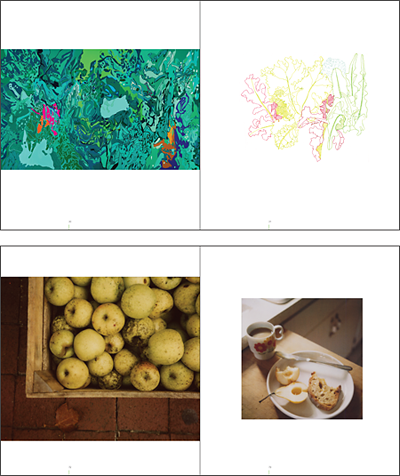
From Orchards, Fields, and Gardens features writing from 11 authors, and photos and illustrations from 21 artists. The authors remember activities, people, and places that shape(d) their appreciation for small scale food production and processing. (Sew Green's own bugheart has both writing and photos in the book.)

From Orchards, Fields, and Gardens: Art and rememberings celebrating sustainable agriculture and good food will be back from the printer mid-August! Until then, you can pre-order the book and get $4 off of the regular price.

I hope you like it!


June 30, 2010

Garbage-less Lunches

I may write a whole lot about food over at my other blog (It Ain't Meat, Babe), but I don't get much of a chance to write about how that food gets eaten. I usually leave that up to my readers. But personally, despite spending most of my time thinking about how the food gets prepared, I also have some systems in place for how it gets eaten.

First let me tell you that my day job necessitates a lot of travel. A LOT! I am rarely in my office. Some days I am working in rural communities two hours out of the city. Some days I'm in some far-flung suburb. Occasionally I am lucky enough to be working somewhere within walking or biking distance. As a result of this, I've become very good at packing a lunch. I know it's usually the most cost-effective and environmentally friendly thing to do. Not to mention the fact that vegan food is hard to come by in most places, especially if I'm looking for a quick lunch to eat while I'm traveling.

So I pack my lunch. But what do I pack it in?


Over my many years of lunch-bringing, I've figured out how to make everything involved with my lunch reusable. Lots of schools have garbage-less lunch programs in place, I figured why not have a one-woman garbage-less lunch policy in place for myself?

My first step was to find some glass containers with good lids. I try to use as little plastic as possible, period. Although we have no microwave at home, I do sometimes use one when I'm lunching elsewhere and I am loathe to microwave any of my food in a plastic container. (Why fuss around trying to figure out if one container or another is "microwave safe" when you can just avoid the potential danger all together?)

So far, in our house, we've tried three different kinds of glass containers (all have plastic lids). The little round one in the photo above is made by Anchor. We have larger versions as well and I have to say that they are the clear winners. They are union-made in the United States and they are reasonably priced, widely available, and oven safe. The lids fit tightly, even after a few dishwasher washings. They aren't completely leak-proof, but they aren't too bad if the food inside isn't too liquidy.

The other container in the photo is made by Pyrex and it is my least favourite of our three varieties. The sizes are kind of awkward, and the lids are freakishly tight at first and then loosen a lot when washed in the dishwasher. Though I must say, looking at their website it seems they've introduced a line of containers with "No-Leak Lids". I'd be anxious to give those a try.

My other favourite is the Glasslock containers (not pictured). The lids are almost completely leak-proof (why "almost"? Well, let's just say my purse smells a bit more like curried cauliflower than I'd like it too. However, my boss brings soup in one of these containers everyday and her briefcase is unscathed, so I may just have a slightly wonky specimen.) These are a little heavier than the Anchor containers and some of them are labelled "not safe for oven". They are also made in the U.S.A.


The other lunch item I never leave home without is my homemade cutlery holder. If you can sew in a straight line, you can make one of these. All it is, is a rectangle of fabric, folded over on one end with stitches making sections of the fork, knife, spoon, and napkin. I added a ribbon to one end so that after I fold down the top flap and roll it up, I can tie it closed. Some spare cutlery from a secondhand store and a cute cotton napkin complete the project. It doubles as a placemat if you want to be fancy. And at the end of the week you can throw it in the washer. I like it so much I'm slowly making similar ones for all my coworkers.

And last, but not least, (though totally unrelated to lunches, at least right now) I wanted to give you all a garden update. You may remember my last post about getting over my fear of starting seedlings from scratch. Well, get a load of those little seedings now:


They're big, healthy tomato plants! Growing happily in the garden. I can't wait until harvest time.

J.

March 18, 2010

Spring Greening


March. I love this month. It's filled with birthdays, the first warm sunshine of the year, birdsong all day long, and fresh green shoots. The 20th is the Spring (or Vernal) Equinox this year, the official beginning of spring in the northern hemisphere. At last! This is a month of change, and a perfect time to make and break some habits.

In light of this, (and because this is my first post and I want you to get to know me better!) I thought I'd let you into my mind a little today. Being a maker and trying to be green don't really go hand in hand - after all, the things I make are luxuries. Frivolous. Unnecessary. So I try to use the greenest materials I can and create the greenest product I can, but where do I begin? There's so much conflicting information -- have you heard, for example, that bamboo fabrics are not all that green? That's not to say all bamboo products are bad, it just has to be used in the right way to be earth friendly.

It's so important to question the 'evidence' we're presented with, and to keep researching - this time six months ago I'd have been happy to tell you that bamboo fabric is a perfectly acceptable eco-product!

So I thought I would share with you the process I go through when picking my materials. It's simply a list of questions that I try to answer to help me determine "green" from "green-wash". (I'm sure this will be nothing new to many of you, but a refresher never hurts, does it? :) This can be applied to any product. It's not comprehensive, or in any kind of order. And these definitely aren't rules. This is merely a guide to keep me thinking, questioning and making better decisions. I hope it can do the same for you!

Who made it?
More of an ethical issue than an environmental one, but it's important to consider, particuarly as so many companies use cheap foreign labour for their products. Often they don't know enough about their own manufacturers, who could be employing children, providing unsafe work environments, and underpaying their workers. Fair trade is great - it means that the "little people" behind the product are given a living wage (i.e. enough to provide food and shelter for their family), given a safe working environment and helps make sure the vulnerable aren't being exploited.

Where was it made?
The country of origin can help you answer the previous question, but there are other things to consider. Some countries can legally produce items with substances which are illegal (for good reason) in your country. (Remember those big toy recalls a couple of years ago?) That doesn't make these manufacturers evil, as essentially they're just doing what they're told! Then you need to consider air miles -- how far has this product had to travel to get into your hands? Transport uses fuel, which causes pollution, which causes all kinds of hell for Mother Nature. This can have a huge environmental impact. The more local, the better.

Hemp & organic cotton bag using fair trade materials

What is it made from?
Sustainability is key. True sustainability means the product fits within nature's cycle - no harm is done to the environment when it is made, used or disposed of. Most 'sustainable' products fit into a grey area, where they fit some of the criteria but not all. Classic examples of sustainable materials include hemp and bamboo - they grow fast and organically (without use of pesticides), and are versatile and durable. Often, though, that's the extent of it. Substances used in processing these materials sometimes means that they can't safely biodegrade - but they can still be better than many alternatives!

When will it reach the end of its life?
We all know that disposal is a big issue. But to an extent, as consumers, we can control how much we send to landfill or throw in the recycling bin. Avoid anything over-packaged (i.e. anything that has more packaging than necessary to get it into your hands undamaged). Buy things to last. Save up your pennies and buy the best: quality over quantity. Then look after what you've got! Your jeans have a hole in the knee? Patch it. Broke your favourite mug? Mend it. Be inspired by the Japanese art of Kintsugi, find the beauty in old things and treasure them!

How do you use and care for it?
Most of a products environmental impact lies in how it is treated by the consumer. Clothes are a particularly good example. How often you wash your clothes, at what setting and using which detergent are all factors that determine the size of an individual item's environmental impact. Try to choose products which don't need too much of this kind of care.

Why do you want it?
This is probably the most important question! If you can talk yourself out of an unnecessary purchase, you're doing good for the environment. Ask yourself if you need it, if you'll really use it, how and where you will store it, could you buy a second hand version instead, what else could you spend the money on? Think thrifty. Learn to value old over new, you'll be surprised how satisfying it can be. But most importantly: value what you already have. Don't replace anything with a 'greener' option if all you're doing is creating more waste!

So, what are your tips for sussing out green from greenwash?

P.S. apologies for the terrible title pun ;)

February 25, 2010

spring napkins


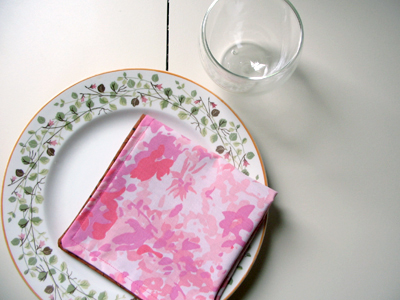
in the few warm days we had last week, i started daydreaming about outdoor fika and picnics, complete with china and cloth napkins.

for the ridiculously longest time, i've been meaning to use cloth napkins at home. i'm usually just cooking for myself, and i often don't use any napkins, so i've put off buying/making napkins.

a couple of times i have almost bought these beautiful hand printed napkins from linea carta. my friend jen has these cute ones from wonder thunder. but i figured i should use some of the fabric i already have. from my stash i sewed these napkins for my parents for christmas. it's fun to give something useful that will also hopefully lead to less paper towel usage.

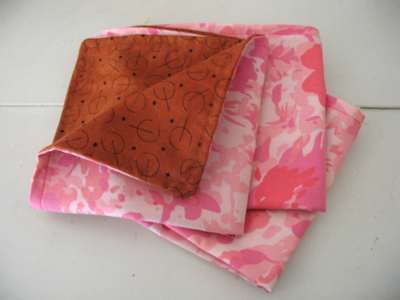
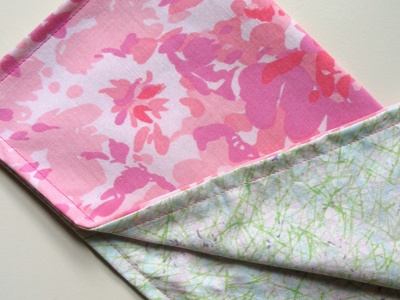
finally this weekend i made these pinkies for myself. the floral side is cut from a thrifted pillowcase. the other side(s) from left-over quilting fabric. i like to mix floral and geometric patterns.


although i have made quite a few quilts, i am a terrible sewer. i don't know the names of stitches, and i pretty much only sew (somewhat) straight lines with the default stitch. (occasionally i'll go crazy and zigzag). my point is that you don't need to be a seamstress to make these.

1. cut two squares (or rectangles) of fabric.
2. pin the sides that you want to eventually be on the outside against each other (right side facing in).
3. sew a line around the edges of all four sides (about a quarter inch in from edge), leaving a space at the end of one line so that you can turn the square inside out.
4. turn it inside out.
5. iron it. (i often skip this step, because as you can see, i'm not a perfectionist when it comes to sewing.)
6. sew four more straight lines around the edges (tucking in the open parts—no hand sewing required!).
voila.


i am sure there are more elegant ways to make napkins, but this is a pretty easy option.


did you see stephanie of 3191's simple, yet classy indigo napkins?

cheers and happy fika-ing with cloth napkins!

ps. check out how seattle rocks with their big urban gardening plans!


August 8, 2009

(tap tap tap) Is this thing on?

Ok, so it's been a while hasn't it? The world has gotten crazy, then awesome, then crazy. Honestly it is my goal in life to dial the knob to awesome and then break it off so really, it's a good thing.

So if you don't remember me or if you don't know - a brief bit of info for you all in the blogosphere! My name is Amber Clisura and I am a fashion designer who takes a special emphasis on renewable, sustainable, and eco technology as applied to the craft of fashion. I worked most recently with Del Forte Denim and Mission Playground. I am currently freelancing in the San Francisco Bay Area and you can see my work here.

I feel that fashion (and that is all fashion, jewelry, accessories, and shoes) is yet another one of the many places where to be sustainable and eco has been an uphill battle. Only in the last few years has green become synonymous with "hip" with everyone from Chloe to Seven getting on the bandwagon. Today I wanted to scale it back a little to some homegrown peeps who started a artist collection called "Social Entropy" and who are staging their first fashion show this weekend, August 8th, at the Oakland Metro. I also wanted to shine the spotlight on one of their featured designers Rhiannon Jewelry.

Rhiannon Jewelry was started by Shannon Haire in 2000. Rhiannon Jewelry specializes in creating one of a kind, custom pieces. She does limited edition lines with wedding sets and her signature gun necklace and the bullet lines. Most recently she started using semi-precious and precious stones in her sterling silver and gold fine jewelry lines. Never one to say no to something shiny Swarovski crystal has also made it into some of her more whimsical pieces. Most recently with the eye towards green reaching the jewelry world Shannon as started to employ recycled and organic materials ranging from bullets to recycled vinyl records and antique keys. Her fine skills are not lost on those in the know. Her fine craftsmanship has been utilized by the likes of Tori Amos and her jewelry has been worn by Samia Doumit in the movie "The Hot Chick."

I had a chance to sit down with Shannon at Cole Coffee in Oakland to talk about the show and how she feels about the eco movement within her line of work.

So Shannon, why recycled? Do you feel it has a place in somewhere like jewelry?

I think recycling is important in everything. For most people jewelry is a luxury product so I like the idea of building it out of materials that are organic or once discarded. Elevating the discarded to divine.

Speaking of devine, your labradorite necklace is quite stunning. Are your stones produced sustainably?

I love using sustainably produced stones in my custom work, and find it important stress to my clientele that it is very important to do so whenever possible. Unfortunately the price point is so prohibitive for most people that I instead try to use stones for my ready to wear line that are purchased locally though through small businesses in the bay area, rather than on line or at trade shows. That's also where the idea for the recycled line came into play.

I was wondering what could have attracted you to the idea of using bullets in jewelry.

I really liked the idea of taking something that most people think of as ugly and destructive and transforming them into things of frivolity and beauty.

Tell me more about your process with the recycled pieces.

Well, bullets are always recycled. Mostly fired and collected by me as well! I've also been into using recycled records lately too - just because so many think that Vinyl is obsolete. I pair the vinyl disks I have with antique and recycled broaches or vintage sterling silver pieces. There are also many pieces with real branches and leaves that have been dipped in silver. A way to evoke the green without using hemp and clay beads! I've also been quite fond of utilizing reclaimed wood, bone and seeds as elements in my jewelry making.

I know, as a designer, it gets tough every day trying to make - what keeps you going? How do you not make the same thing all the time (cause god knows I make that damn shrunken vest every two years!)

Day to day I look for ways to take traditional ideas and turn them on their heads. That's the inspiration for a lot of it. Also, natural colors, leaves and branches, brick...I like both the super-industrial and the sparse open spaces in nature. In terms of my work I always recycle and refurbish my peices. If I don't like them or customers aren't responding to an idea - I take them apart or rework them. Constantly trying trough making to get to the ideal idea. It keeps a fresh outlook for me and moves more with contemporary fashion.


Contemporary fashion and eco still seems so hard for me to put together. Trends are speedy and disposable, sustainability is at total odds with that. What is a challenge facing you as a jeweler in this environmentally conscious times?

Trying to find a balance between fair trade and the love I have for stones in general is always a challenge. So many people are hurting in this economy and cannot afford even inexpensive jewelry - and when you get into fair trade, all costs go through the roof. Finding a compromise is really challenging. In fact, making jewelry at all commercially in these times is challenging...I just hope for the best and try to keep costs low.

So, Damask Boudoir and Social Entropy eh?

Social Entropy has a grand vision and the people involved have the willingness to try it out. Their vision to create something that not only benefits the people involved, but also gives back to the community is great. It also has an edgier vibe which appeals to my nature and excites me. I hope that Social Entropy achieves their goals and am excited to be part of it.

I wanted to sit down with the organizers of Social Entropy but could not get our schedules to work out. Instead I was able to email back and forth with two of the creators, Tania Seabock and Christine Hill.

Social Entropy was started as a way to get like minded individuals together to create. It was important not just as artists to get back to the collective but as people to really join back together into community to draw together as well as inspire.

The Damask Boudoir is their first experiment as a collective. The show is being held at the Oakland Metro Opera House this Saturday, August 8th, 9pm - 2am. In an effort to bring together all sorts of different artists Christine and Tania (both a jewelry and painter respectively) decided to call on their wide knowledge of artists around them. "We wanted to do something with our friends!" writes Christine "Everyone is so talented it didn't make sense there wasn't a place for us to show off and be sucessful at it!" explains Tania.

The night has various recycled runway pieces and fashion lines as well as a full array of regular fashion and couture wear as well. Other designers include Dollymop, Pieces by Anna Quinones, Luma Gallegos, and Erika von Petrin. Performers include soprano singer Diva Marisa, Rev. Mother Joseph, with dancing numbers by the Black and Blue Burlesque dancers, blackhoodygrrl, and MAN-A-SAURUS-REX. Not to mention Rhiannon Jewelry and a bevvy of other amazing vendors and craftpersons!!

Hopefully if you're in the bay area you might get a chance to go out and see this show - especially since yours truly is leaving for two months and will be missing it!!

Social Entropy Presents:
The Damask Boudoir
Saturday, August 8th
9pm to 2am
The Oakland Metro Opera House
630 3rd Street, Oakland
(between Martin Luther King & Jefferson)

Shannon can also be found teaching jewelry classes twice a month for Baubles and Beads, on Shattuck in Berkeley,CA.

July 16, 2009

cloth diapers


I had a baby in January. Before she arrived I had been thinking about what my choices were when it came to diapers. I couldn't help but think about how many diapers I'd be adding to a landfill [5-10 a day for 2-3 years?!?!]. I also really really dislike the smell of some diapers. They add this chemical fake baby powder smell that makes me cringe. If my nose can't stand it, how could I feel OK putting that up against a newborn's skin?? And don't get me started on the dumb cartoon characters. Why does everything have to be cross marketed that way?? I also I knew I'd be drop dead tired and most likely not up for any sort of complicated diapering plan. What could I do to do my part??

I researched g diapers ... but the thought of standing over a toilet with a wand in the middle of the night or saving those diapers until morning really didn't appeal to me.

Then I hit the gold mine in terms of cloth diaper info. I read ask moxie's cloth diaper posts part 1 and part 2 . OK - so the reality check is that even using cloth diapers isn't the best - but as much as I planned on being in tune with my baby, the elimination communication method probably wasn't going to work for me.

Realistically, I also knew there was no way I'd want to launder my own diapers. But there are some ways to make it easier than you'd think. check out soft cloth bunz or diaper pin for all the possibilities - and for articles and support on how to diaper at home. I wish I could be that hard core and good.

And then we got lucky. One of my friends gave us 3 months of a diaper service as a baby gift. ABC diapers is run out of Sacramento, CA and they serve the entire Bay Area. As Hayley mentioned in her last post - it's easy. You drop a bag of soiled diapers on your porch one night and the next day you get a whole bag of clean ones. [see the above blue bag] YES these services use water - and yes water is a scares and precious commodity in these parts - but I still feel better than if I used disposables. I don't have to contribute to what goes into manufacturing the diapers [if you want to know what goes into making a diaper - read here [eeewww] , shipping the diapers, disposing them. Although when my daughter goes to daycare I'll have to use disposables there - at least that will be only part time. YES ABC's delivery trucks use gasoline, but they are looking into bio diesel.... and at least we're talking delivery of a couple hundred miles instead of thousands of miles.

Sometimes I feel as though it's simply important to do what you can when you can. And trust that every little bit helps.

I do wish there was a good disposable that used recycled content. Seventh Generation eschews the chlorine - which is great - but still uses wood pulp [and doesn't list that it's post-consumer content]. There's also tushies diapers which like Seventh Generation are better for baby. But the magic better for the environment diaper that is convenient could be someone's million dollar money maker. [maybe anjolina jolie or some other celebrity environmentally conscious mom should champion this cause]

The cost of this diaper service is comparable to buying disposables. Maybe even cheaper. If you want to find a diaper service in your area try the national association of diaper services . If you are in So Cal... Hayley used this service.

Don't think it's tough to use cloth diapers out in the world. It's really not. Just keep a few extra in your bag... and be sure and keep some baggies [I like to use the bags that our Sunday paper comes in] to hold the dirty ones until you can get them home and into your pail. I ended up getting the vinyl sleeves to hold the diaper - so there is no pinning - just folding and velcro and snapping involved. Every couple of months I have to get the next size up sleeves. 3 has been a good number for me. 1 to wear 1 that's in some state of wash/dry and 1 as backup. What to do with these sleeves when you are done I still haven't figured out. I'd be happy to hand them down to someone - they are technically cleaned and washed [although no longer white and shiny] -- but I'm not sure I'll find a taker.

Plus having the diapers on hand is really a nice thing. They make great emergency breast pads/burp cloths, they clean windshields on cars like there's no tomorrow, they pick up cat puke incredibly well [and i didn't hear a peep of complaint from ABC about the mystery non baby mess], they are quick to catch the pee stream that always happens once you REMOVE the diaper [don't think this won't happen to you], and you can hand a clean one to the babe while you change them to keep them occupied [who knew a cloth diaper could be so fascinating?]


and the cat likes sleeping on them. How could I take away his favorite spot??

July 9, 2009

dish towels


I had always wanted to give up paper towels, but found convenient reasons to keep on buying them. My cloth dish towel collection was accumulating, and I was using them, but only for non-staining messes so not to dirty the towels. When I had a baby I was expected to enter the world of disposable everything. Troubled by the idea of creating excess trash, I made the controversial choice not to use disposable diapers, much to the surprising disgust of almost everyone. Who knew people would be so opinionated about me wanting to put cloth diapers into a bin, instead of disposable? I signed up for the service that dropped off 80 clothes a week, and picked up the dirty ones. Highly recommend to any new parent. Getting 80 cloths a week, that I didn't have to launder myself was one of the greatest things ever. I used them for everything, from spills, spit-ups, breast pads [not attractive but effective around the house], and of course, diapers. The best part was never worrying about running out, or having to go to the store to pick up a bulky case of diapers.

So then a funny thing happened, I ran out of paper towels and didn't notice. When I finally got myself out to the store, baby in tow, I cringed at the fact of lugging the groceries, baby, and towels up to my second floor apartment. It sounds petty, but as a single mom I have to carry everything myself, and when I have a large car load I feel like that farmer at the bank of the river, with the chicken, the bag of seed and the wolf. It's a balancing act that can't end with leaving the baby unattended on either end.

And now I use my cloth towels for everything. For staining messes like pitting cherries, or gross baby messes, or even just to eat an apple without dripping juices. And when they are dirty they get thrown in the wash along with our clothes. My towels may not be in pristine condition, they have stains and holes, the edges are getting raggedy, but I save money, time, armloads, landfills and hope I am setting a good example for my little plum. I am waiting for that day when she turns to me and says, "Can you believe they make towels out of paper and people just throw them away?"

A few tips:
  • Put a bin, basket or bag in the kitchen to put used rags- I use a bag that hangs over a metal storage rack.
  • If you have fancy towels, also buy a cheap set of plain one for the really messy stuff. I like the flour sack towels from Target- either white, or organic.
  • Old shirts and worn out clothes can be upcycled into towels. There are plenty of instructions out there, or just cut & hem.
  • If you do make your own- don't spend too much time on them or you will be less likely to use them. But don't stick with plain ones if that is not your style.
  • Store them in a convenient place where they are easy to grab. I keep a few hanging over a horizontal paper towel holder, and the rest folded in a kitchen rack, and some smaller ones in a pretty bowl.
Cheers!

*towels are a mix of Ikea, organic cotton from Target & vintage

January 12, 2009

box of food links


(photo of the excellent book fatal harvest, from the chapter where they talk about CSAs)

i find myself getting more and more into food/farm books/issues. here are some good links i've come across lately:

civil eats "promotes critical thought about sustainable agriculture and food systems as part of building economically and socially just communities." (i also love their logo.
)

local harvest is a great place to find sustainable farms and CSAs near you.

organic consumers association is a politically-focused site that posts great articles (from various sources). their millions against monsanto page is super informative and important. you can watch the documentary, the world according to monsanto here. i have only watched part of it, but that part was chilling and infuriating.

and finally, some action! if you are interested in getting america to move toward a more sustainable agriculture, you can sign a petition to get some good folks in beneath the agriculture secretary: food democracy now's sustainable dozen.

(cross-posted on mecozy)

November 24, 2008

abundance and revolution


Last night I watched this documentary on PBS about the Karuk tribe of California. They live along the Klamath River. The logging companies and the federal government’s fire suppression policies have almost destroyed the Karuk. The Karuk cannot gather their medicinal plants, make their traditional foods, practice their ceremonies, etc. like they used to, because the landscape, their home, has been altered so much. Fire suppression and the planting of fir trees has almost wiped out many of the native plants in the area. This also affects the river water (fir trees drain the water) and thus affects salmon and other river flora and fauna.

The Karuk believe that the earth provides everything we need. Watching this documentary, I recognized a lot of similarities between the Karuk’s values and those of the Slow Food movement. There is an understanding that ecology and culture are inextricable, and that the only way to maintain cultures is to respectfully and correctly manage the environment. This is also the only way the earth will continue to provide for us. This kind of value system is not an economic one, but a subsistence one.

Now when we’re in this big economic crisis, I think these values are vital for us to ponder. When we don’t trust that the earth and our community will provide for us all, we become greedy and we try to figure out ways to produce/extract as much stuff as possible at any cost. {As an example, industrial agriculture plants monocultures of crops, because in the short term that is the easiest way to produce a lot of food. This ruins the soil fertility however, which will not only make the land unproductive, but also endangers surrounding communities because the soil won’t absorb water. Thus when there is a flood, it is far more devastating. There are tons of examples how overuse like this not only leads to depletion of resources and the obliteration of biodiversity but also makes us much more susceptible to flood, fire, hurricane damage.}

In the book Plenty, the co-author imagines what the part of Canada he lives in looked like before Columbus. The abundance of animal and plantlife described struck me. Our earth has become and is fast becoming less and less abundant because of our incorrect management of the environment, our shortsighted overuse/exploitation of resources and our blindness (or willfull ignoring of) how we are connected to all creatures and plants. In the focus on profit, we (industrial societies) are killing cultures, we are killing plant and animal species, we are endangering lives by making communities more vulnerable to natural disasters, we are polluting water. The list goes on and on.

I worry that in hard economic times, people will look to the short-term solutions that (the agriculture, oil, etc.) industries offer, instead of re-evaluating our capitalist value system. But I hope having a visionary leader (in America) who seems to want us to fight for community and for what is right, might inspire us to work towards just and respectful ways of living on and sustaining this earth and the earth's abundance.

Cross-posted on Mecozy.

November 30, 2007

Shameless Self Promotion!!!

Erp.

I'm a little nervous about posting this here... but I swear that I was told that this is just the place to post this. So if you don't like this, or me (that isn't very nice) I blame Lisa. :)

Tomorrow, Friday, November 30th I'm speaking on a panel for Sustainable and Organic Design at San Francisco State University. The talk begins at 7pm and honestly, I would be honored if any of you could make it. This is the first time I've spoken in public about what it is we do at Del Forte and my experience in Organic and Sustainable design.

I'm going to be talking on the subject of our business (fashion, specifically organic cotton denim) and how this is sustainable specifically and, in a larger sense, what is sustainable for the world and for future businesses. I will most likely also talk about how to go about being sustainable, what sustainable means to me, and how to bring this sort of mentality and knowing to a broader scope.

A University Map may be found on http://www.sfsu.edu/~sfsumap/, The event is on the top floor of the Ceasar Chavez student center, located in the center of the campus. If you are driving, parking is best in the one large parking structure off of Lake Merced Blvd. You can also take BART to Daly City and take the SFSU shuttle to campus.

Again, the event starts at 7pm and there will be three of us talking and answering questions. My fellow panel-mates will be including Gail Baugh, Textile Specialist from San Francisco State and Jeffrey Bletcher, founder Yam Street. If you ever had any questions about sustainability in fashion, textiles etc here is a great opportunity for you to ask them! One of my favorite teachers always said that there were never stupid questions in the world. Only people too stupid to ask. I always liked that.

So yes, that was my shameless self-promotion. I hope you don't mind... and I hope even more that you can all come down if you have the time. Thanks!

June 2, 2007

Links for your green fingers


Mount Iwakiyama was hard to say but the American badger knew he'd adjust. Collage on postcard, Gracia Haby, 2007.

A little over a month ago now, as I read the weekend papers several days after said weekend (are you perhaps sensing a pattern here?), I came across a reference to Sew Green in an article by Andrew Stephens and John Bailey, Back to the future (M, The Sunday Age, April 22, 2007). An article all about becoming a little more green. A three page spread on making your life a little simpler, and in short, a little more like your Nanna. All hail a return to the days when a "commitment to thrift, conserving resources and canny housekeeping" was the norm. Small ways in which you can make a difference today, from buying products with less packaging, making your own all purpose cleaning products, relying upon the virtues of vinegar and bi-carb soda in place of a chemical nasties, a different chemical concoction for each room and surface in the house. Vegetable patches, string bags, walking, and generally using less, yes, that's something we all can do. And should your green thumb have deserted you, leaving you with turnips and radishes fit only for a mouse, why there are always plenty of other green alternatives to living a cleaner, greener, simpler life.


He travelled for some time without incident. Collage on postcard, Gracia Haby, 2007.

So, here are some of the green links found in that article for you all to discover at your leisure -

Fresh Green Clean
Safer, healthier and cleaner indoor living spaces
"Learn how to clean effectively and efficiently with methods that don't cause harm to people or the planet".

Plump Organic Grocery (in Yarraville, Victoria)
"We stock quality organic and bio-dynamic produce including fresh fruit and vegetables, dairy products, wine, beer, bulk grains & cereals, soy products, meat, bread, eggs, juices, and much more."

Green Living Australia
All about living a "Green" life, starting in our homes.

Estring bags
Don't cost the earth.
(I've just ordered three long handled string bags in Ocean Blue, Pink Cherry Blossom and Fresh Green, and can't wait for them to arrive via snail mail.)

Sustainability Victoria
Find tips for the home and brush up on your facts while you're at it (Wind energy - myths and facts).

And what of Sew Green? Why, we're mentioned here: "Younger people tired of throwing away their money on poorly made mass-produced clothing and fabric products are discovering the rewards of handicrafts and clicking on to sites such as sew green.blogspot.com and Bee Green to learn how to make soft toys, darn socks and whip up a new blouse to wear to work".


We thought we knew a great deal, but really we knew nothing. Collage on postcard, Gracia Haby, 2007.

Now I'm off to get my hands on a copy of Cradle to Cradle: Remaking the Way We Make Things by chemist and process engineer Michael Braungart and architect William McDonough, to read about the big things that can be done, to discover how buildings can be built like trees, like nature...

"Imagine a world where human industry operates exactly like a blossoming cherry tree: Every factory, every building and every product is as giving as a cherry tree with its flowers.

Imagine a world where our buildings are like trees: They cover their energy needs by harvesting solar power, produce food and oxygen, create habitat for other species and change with the seasons.

Imagine a world without pollution and waste: Products are made from materials that are beneficial for humans and their surroundings."

Believing that it is not simply enough for our actions to be 'less bad', to be 'less harmful', to the environment, Braungart and McDonough advocate, and practice, that there should be no waste whatsoever... that all waste should equal food. That all waste should give back to the biosphere. Just like trees (There's room for a book review on that one, and indeed many books currently on the market. Any takers? Care to pen a little book review on a green text you are currently perusing, Shari, Louise, anyone?). Oh, dear. Must dash, I fear I've bitten off more than I can chew with this one! I'll leave you to dig around further here and here.


Coins in every fountain. Collage on postcard, Gracia Haby, 2007.

In lieu of any green photos, I have littered this post with several of my recent collages... collages of animals seeking new homes in a changing environment. I hope you like them.


They are discussing environmental policies. Collage on postcard, Gracia Haby, 2007.

May 31, 2007

Cloth pads

Apparently the average woman will use around 17,000 pads or tampons in her lifetime, the majority of which are flushed down the toilet, a terrible though huh? Just imagine the waste they produce, damage they cause and the money they cost us.
After having my second child i breastfed until she was around 15 months old therefore i didn't menstruate, it was great. Soon after i weaned her from the boob my cycle returned, ugh, i started using tampons again and i hate them. So, i have stared to make my own cloth pads and am looking into ordering a menstrual cup.
I have put together a step by step of how i make my own cloth pads, i will add the pattern to the sidebar in the next few days.

Cloth pads
You will need:
flannel for outer
flannel for inner
scissors
pins
sewing machine

Wash, dry and press your fabric. I have used half a metre of flannel and folded it to cut out 4 pads at once.

Cut out your pattern pieces

Take each of the bottom pieces and fold the opening edge over 1/4 inch, press then fold over again, press and sew in place.

Pin the pieces together and sew around the edge, clip the curves and turn right side out.

Press. Top stitch around the edge and sew down each side to form the wings. Add pressers or velcro to the wings.

Make a pad to fit inside, i have recycled a flannel bed sheet. I sewed 2 pieces together, turned right sides out and top stitched all the way around. I made it large enough to be folded into 4 layers and quilted it randomly to keep it in shape.

Underside with pad

The finished pad

These could also be made on an overlocker/serger but you would need to adjust the seam allowance or they will turn out bigger. You could also adjust the pattern to make larger or smaller pads with thicker or thiner inserts for heavier or lighter days. I've seen these made with a nylon backing to make them waterproof but i prefer not to, i plan to only use them on light days and use the menstrual cup on heavier days.

May 17, 2007

Clean Green


When I was a little girl, we had a kitchen towel that hung from our oven door handle. It had a cat embroidered on it that was outfitted in a head bandana and an apron and in her hand was a broom. Underneath were the carefully embroidered words, “I love to clean!” My mother told me that my grandmother had made it for her. It was ironic, because with five children, the last thing my mother loved to do was clean.

Actually I love to clean. At a very young age I developed a total aversion to cooking but would beg my parents to let me clean the kitchen. I would stand on a footstool and wash dishes. My partner laughs about that now since I do not really enjoy doing dishes anymore, but I still love other cleaning. There are few things more completely satisfying than a perfectly clean abode.

Yet when you look closely at the label of your cleaning products, the last thing you feel is clean. Check the back of your cleaning products at home and you will multiple warnings, such as CAUTION , EYE IRRITANT, and KEEP OUT OF REACH FROM CHILDREN. Not only are most of these products environmentally unfriendly, but also they are also toxic.

Fortunately there has been an influx of great products on the market in the last few years by companies such as Seventh Generation (now available at Target) and Ecover. Seventh Generation states that “if every household replaced just one bottle of petroleum-based all-purpose cleaner with a renewable resource based product, we could save 7,100 barrels of oil, enough to heat and cool 400 US homes for a year!” These products are non-toxic, biodegradable, vegetable-based, and contain no phosphorous, dyes, or artificial fragrances.

Unfortunately, these products are not cheap (although the price is comparable to most other cleaners). So I am including so more specific information about common household cleaners and including DIY cleaning products as alternatives to eco-friendly products in stores (adapted from Red Scare #3, 2001).


Ammonia / all-purpose cleaners
Products like Mr. Clean are very harmful to skin, eyes, and lungs and can exacerbate asthma.
Make it yourself by using liquid soap. Mix 1 tsp. liquid soap into 1 qt warm water. Add some lemon juice or vinegar to cut the grease. This solution will be great for almost all your household cleaning needs.

Glass cleaners
Cleaners like Windex contain irritating fumes that are a major eye irritant.
Make it yourself by using 50/50 water & vinegar. Put in a recycled spray bottle and wipe off with newspaper (doesn’t leave annoying rag or paper towel ‘fuzz’ on glass). Note: Regular glass cleaners leave a residue on the glass, so you may notice some streaking the first time you use the 50/50 cleaner. This should disappear after the 2nd cleaning.

Furniture & floor polish
Polishes like Mop & Glo contain carcinogenic phenols (yikes!) and highly toxic nitrobenzene. Exposure during use & residual fumes are both dangerous.
Make it yourself by using vegetable or olive oil. Apply oil sparingly with a soft rag. Add some lemon juice or other aromatic oils from a heath food store and you’ll get the nice smell. You can use almost any oil to polish and condition wood, including olive or vegetable oil. Polish when dry with a chamois cloth.

Rug, carpet & upholstery cleaner
These products usually contain dangerous solvents that can do both short- and long- term damage to the central nervous system.
Make it yourself by using baking soda. To deodorize your carpet, use a large box and sprinkle liberally on your carpet, wait 15 minutes, and then vacuum it up. A great spot remover is a solution of ¼ cup borax dissolved in 2 cups cold water, undiluted vinegar or lemon juice.

. . . . . . . . . . . . . . . . . . . . . . . . . . . . . . . . . . . . . . . . . . . . . . . . . . . . . . . .

Here is a favorite recipe of some sew green girls:

Use Less Stuff All-Purpose Cleaner
Source: "Better Basics for the Home"
by Anne Berthold-Bond (Three Rivers Press, 1999)


• 1 tsp baking soda (or Epsom salts)
• 2 tsp borax
• 1/2 tsp liquid soap
• 2 cups hot water
• several drops antiseptic essential oil (lavender is a favorite, others include sweet orange, lemongrass, rose, clove, eucalyptus, cinnamon, rosemary, birch, lavender or tea tree -- all are natural antiseptic oils).

Combine the baking soda, borax, soap and essential oil in a spray bottle. Pour in the hot water, mixing well to dissolve the minerals, screw on the lid tightly and shake well. Label the bottle clearly, and as with all cleaning products (even the ones you make yourself), keep out of reach of children.

Note: Borax is available in the laundry aisle of most supermarkets. For liquid soap, use something mild like Castille soap, Ivory or Ecover. If you use a concentrated product like Sal Suds, use less than called for in the recipe.
. . . . . . . . . . . . . . . . . . . . . . . . . . . . . . . . . . . . . . . . . . . . . . . . . . . . . . . .

I often use a swiffer to clean up annoying cat hair, but I hate throwing those covers away. Now there is a creative alternative to disposable dry cloths. Try knitting a reusable knitted swiffer cover. It's so clever and it really works!

We aren’t the only ones concerned with household cleaners --- Find out how to green your school cleaning regime here. There is also a campaign to get Disney to go green! Check out the campaign website here.

Now you can start cleaning green!